
EPR2: design enters its consolidation phase
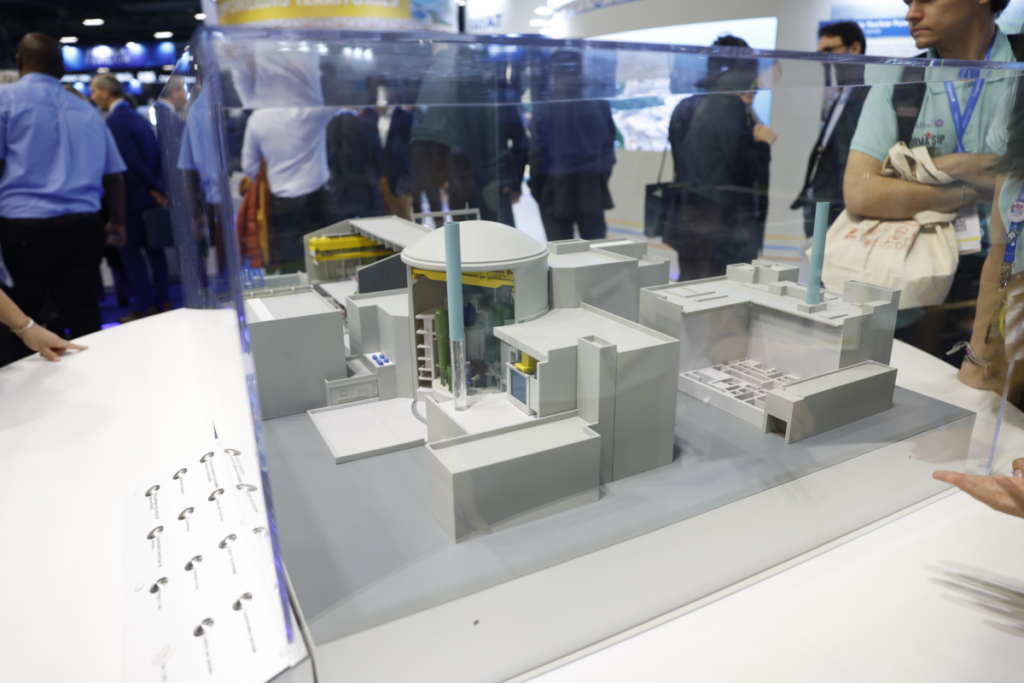
EDF now considers the main fundamentals of the EPR2 design to be stabilised. Building architecture, instrumentation and control, electrical distribution, maintenance and adaptation to climate change: the future reactor is entering a consolidation phase, with one central objective — securing its construction while preparing today for its operating performance over several decades.
Drawing on experience gained to build facilities today that are resilient to tomorrow’s challenges: this sums up the complexity of developing the design of the EPR2, the future large-scale reactors of the French nuclear fleet. “At this stage, the technical risks associated with the design have been characterised and addressed. The fundamentals of the product are stabilised: building design, individual systems, the instrumentation and control architecture, and electrical distribution,” said Séverin Buresi, EPR2 Design and Operations Manager within EDF’s New Nuclear project ownership team, during a webinar organised by Sfen.
Securing this part of the design is the result of extensive work by EDF, which is currently consolidating its documentation ahead of the final investment decision. “A first version of this document has been presented to the Executive Committee,” the EDF representative noted.
“We involved operating teams in developing the design very early on: technical directors, outage managers, operations managers, maintenance specialists and radiation protection specialists,” Séverin Buresi continued. The objective is to consider the reactors’ operating phase from the design stage. The target is clear: to achieve an average availability factor of 88%. This is an ambitious level compared with the French nuclear fleet, which averaged around 74% over the 2014-2024 period. “Integrating maintenance requirements into the design, combined with the overhaul of the General Operating Rules, enables us to achieve these levels of performance within the outage programmes planned for the EPR2,” he continued.
In addition to its internal work, EDF organised around ten reviews by expert panels during 2026. These panels brought together both internal company members and professionals from other industries, including defence and construction. “These external experts enable us to challenge the soundness of our approaches, whether in terms of design, operating performance, construction assumptions, contractual choices or industrial policy,” Séverin Buresi said.
Building on experience
EDF can, of course, also draw on operating experience from the most recent nuclear projects, first and foremost Flamanville 3, Taishan and Hinkley Point C. “The EPRs are a wealth of information,” Séverin Buresi said. “Without them, I think we would have been ten years behind in our ability to anticipate the difficulties associated with the EPR2 design, and we would probably have been unaware of a number of challenges that we are now able to take into account in reactor design.”
France’s existing nuclear fleet also has a role to play in shaping the EPR2 design. “The current periodic safety reviews of the fleet are tending to bring the units closer to the safety objectives adopted for the EPR2,” the EDF representative continued.
Preparing for uncertainties
“Maintaining design margins will be our obsession over the next three years,” the EDF executive explained. This requirement is intended to address three main challenges.
The first is the comparison between predicted equipment performance and data obtained under real operating conditions. “For certain components, manufacturers still need to consolidate and confirm the data,” he noted.
Potential regulatory developments are the second reason why EDF intends to retain technical margins in its detailed design. “Since work on the design began, there has been a process of preliminary dialogue with the French Authority for Nuclear Safety and Radiation Protection (ASNR),” Séverin Buresi explained. “These discussions enable us to reduce uncertainties associated with the regulatory review as much as possible, but we cannot rule out additional requirements during the design phase.”
The final major issue is adaptation to climate change. “The EPR2 has been designed to withstand major, very high-intensity climate hazards, incorporating the most severe IPCC scenarios,” the EPR2 Design and Operations Manager explained. Rising sea levels, severe low-flow events, high temperatures… “We have to remain humble because we do not know what the future will bring.”
Thus, even though the equipment is sized to withstand the most pessimistic projections, EDF is retaining additional margins for future adaptation. “The diesel buildings, for example, are oversized so that equipment can be replaced in 30 or 40 years if climate conditions require it.”
A reactor designed for a new context
Finally, the EPR2 design also takes into account its integration into a rapidly changing electricity system. First, the units are capable of operating with a maximum MOX fuel loading of 30%.
“The EPR2 is designed for load-following at the same level as the most flexible units in the current fleet, namely those at the Cattenom nuclear power plant,” Séverin Buresi continued.
Load modulation is incorporated into the reactor design so that the units can accommodate the growing penetration of renewable energy. The EPR2 is capable of performing seven major downward or upward load changes per week, moving from 100% to 25% of rated output and back again. ■
By Simon Philippe, RGN journalist
Photo: EPR2 model presented by EDF at WNE 2025 ©EPA / Mohammed Badra