
[Nuclear by the Numbers] Less than 1% of French people’s exposure to radioactivity comes from the nuclear industry

Through its “Nuclear by the Numbers” series, RGN examines the sector’s major trends using key data. According to the latest ASNR Barometer, industrial and military nuclear facilities remain, in the minds of the French public, the leading source of exposure to radioactivity. The reality is very different: radon alone accounts for 55% of average exposure to ionising radiation in metropolitan France. The contribution from nuclear facilities is estimated at just 0.07%.
“We do not live with radioactivity, we are immersed in it!” explained Jean-Marc Cavedon, then a nuclear safety expert, in an interview with Sfen. From cosmic radiation to elements naturally present in soil, air and food, radioactivity is indeed part of our everyday environment.
The assessment of the French population’s exposure to ionising radiation over the 2020-2024 period, published by the French Authority for Nuclear Safety and Radiation Protection (ASNR) in October 2026, now makes it possible to measure its different components precisely.
And the figures contrast sharply with public perception. According to the latest ASNR Barometer, 57% of French people believe that the main source of exposure to radioactivity is artificial. Industrial and military nuclear facilities rank first among the responses, cited by 28% of those surveyed.
The reality is very different. ASNR estimates that the average effective dose received by a resident of metropolitan France is 7.1 millisieverts per year (mSv/year), and “radon is the main source of exposure (55%)”, its work shows. This naturally occurring gas of geological origin is by far the largest contributor. It is followed by diagnostic medical imaging (23%), the incorporation of naturally occurring radionuclides, particularly through food (9%), terrestrial radiation (9%) and cosmic radiation (4%). Industrial and military activities using radioactivity, together with historical fallout from nuclear tests and past accidents, account for less than 1% of the total.
ASNR calculated that “In metropolitan France, the average effective dose per inhabitant is estimated at 7.1 millisieverts per year (mSv/year).”
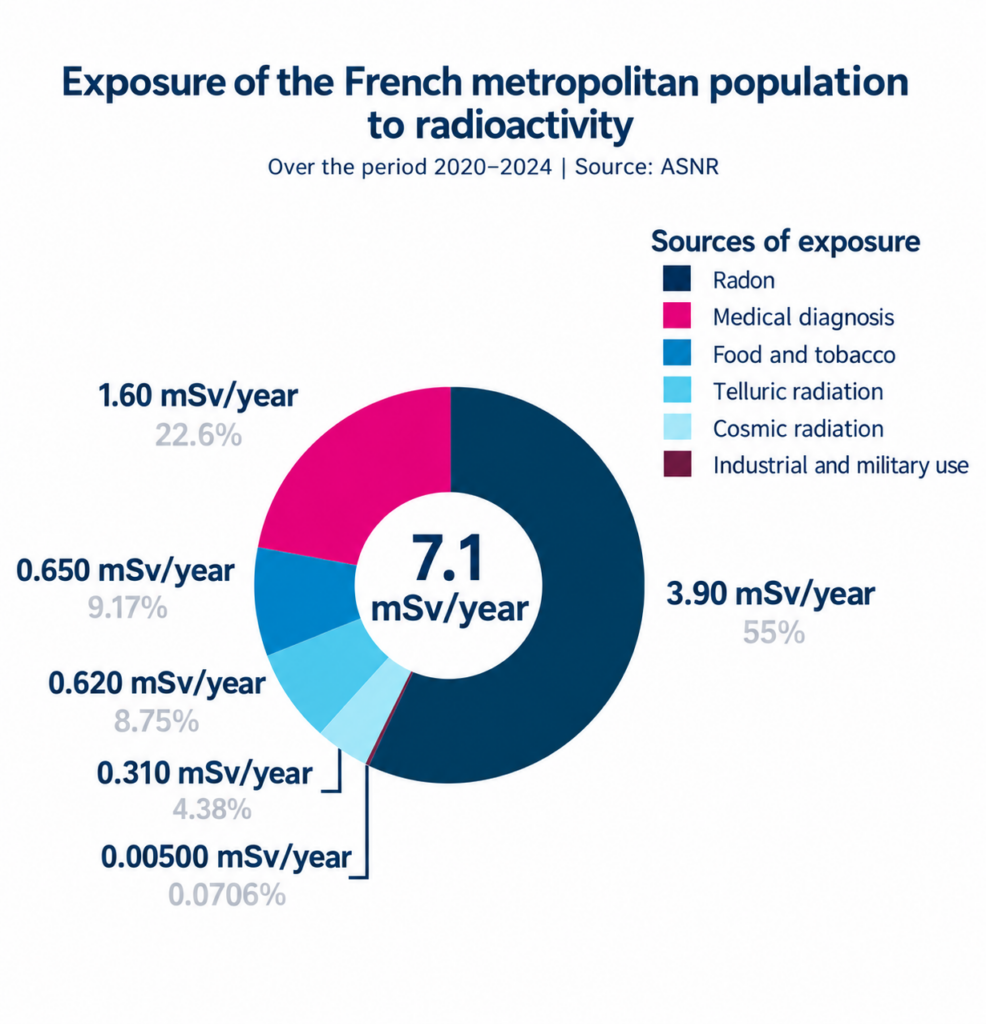
Figure 1: Exposure of the population of metropolitan France to radioactivity over the 2020-2024 period – Source: ASNR
Nuclear tests and Chernobyl: around 0.005 mSv per year
The contribution from nuclear activities and historical fallout is therefore extremely low compared with total exposure.
Today, it is mainly linked to historical fallout from atmospheric nuclear tests and the Chernobyl accident. Between 1945 and 1980, more than 500 atmospheric nuclear tests were conducted worldwide, mainly by the United States and the Soviet Union. These tests dispersed radionuclides into the atmosphere, which subsequently settled on the ground, some of which remain detectable today in the environment and in foodstuffs.
In France, average population exposure linked to fallout from atmospheric nuclear tests and the Chernobyl accident is estimated at 0.005 mSv per year per inhabitant: around 0.0045 mSv from nuclear tests and 0.0005 mSv from Chernobyl.
These orders of magnitude help put the figure into perspective. Exposure associated with eating shellfish once or twice a month is estimated at around 0.17 mSv/year, around thirty times higher. Exposure associated with tobacco consumption can also be significantly higher due to naturally occurring radionuclides present in tobacco leaves.
Nuclear facilities: 0.07% of total exposure
The contribution from nuclear facilities themselves is even lower. During operation, most basic nuclear installations in France are required “to discharge radioactive substances into the environment through liquid or atmospheric effluents, after checks of radioactivity levels”, ASNR explains in its assessment.
Other facilities use radionuclides and fall within the category known as “small-scale nuclear activities”. Most of them are not included in the ASNR study “because of the small number of people concerned and the specific nature of the exposure situations”, the Authority explains. Nevertheless, for the largest facilities, particularly nuclear medicine departments and facilities equipped with cyclotrons, ASNR has begun work to better assess their impact on the population.
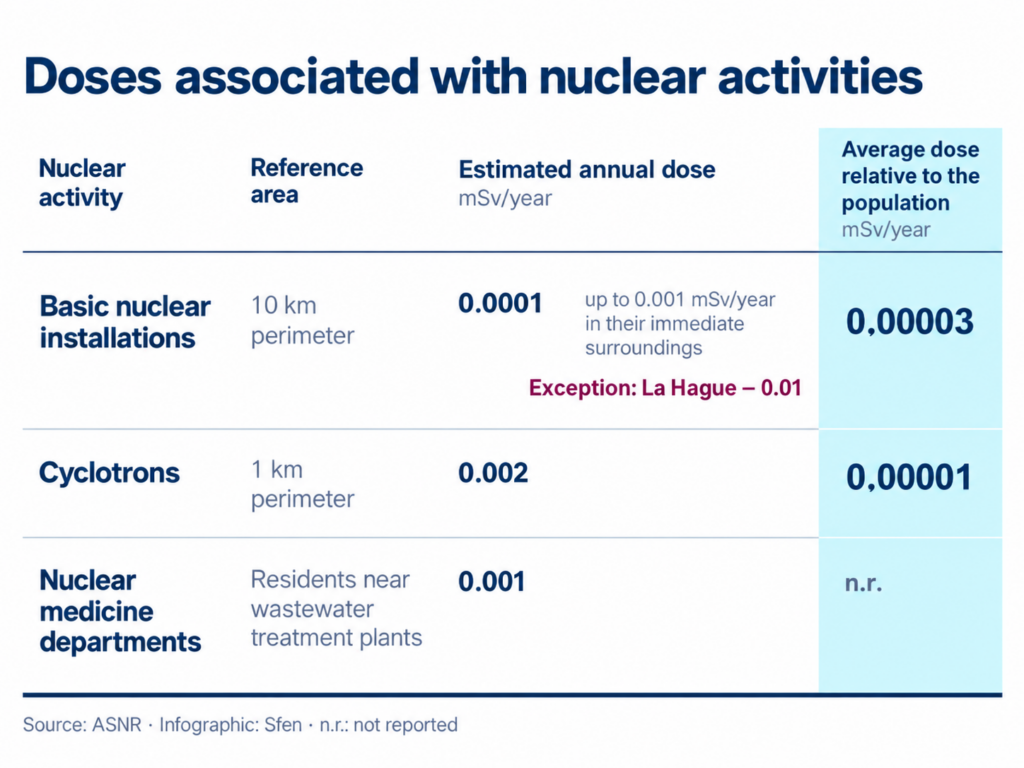
Table 1: Doses associated with nuclear activities over the 2020-2024 period – Source: ASNR
100 mSv, the dose at which the risk becomes measurable
What are the health consequences of exposure to radioactivity? For more than 60 years, monitoring of nearly 90,000 survivors of Hiroshima and Nagasaki has shown that above 100 mSv of ionising radiation received, the risk of developing cancer increases significantly.[1]
Below the 100 mSv threshold, statistically identifying effects attributable specifically to radiation becomes much more difficult, because the expected risk is low compared with the many other factors that may cause cancer. Exposure to low doses nevertheless remains a very active field of research. ■
By Floriane Jacq, RGN journalist
Image: @Sfen
[1] https://recherche-expertise.asnr.fr/foire-questions/faq-effets-faibles-doses-radioactivite