
French government authorises EDF to prepare the site for the two EPR2 reactors at Gravelines
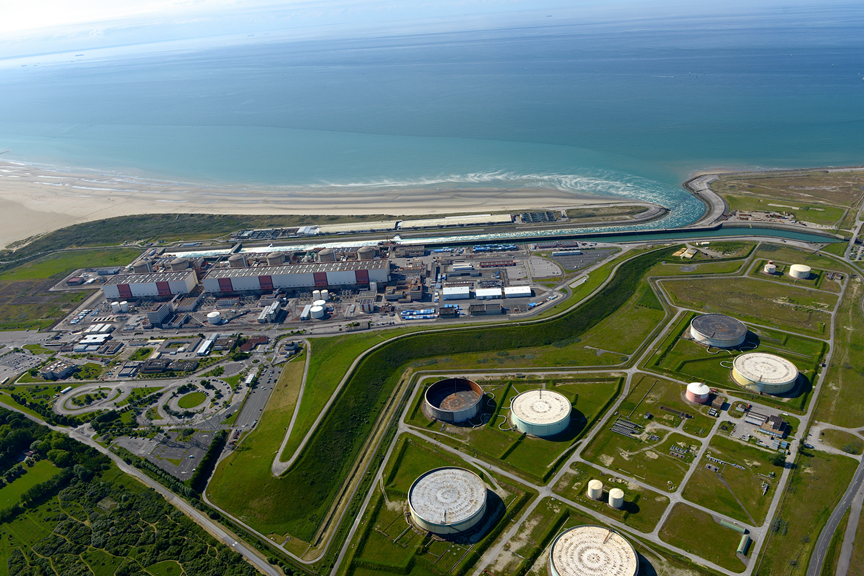
A decree published in the Official Journal on 22 August grants EDF the environmental authorisation required to begin preparatory works for the two EPR2 reactors at Gravelines. This step allows EDF to develop the site and begin ground reinforcement work, but does not yet constitute authorisation to build the reactors.
A new administrative milestone has been reached for the EPR2 reactors at Gravelines, in northern France. Decree No. 2026-807 of 20 August 2026, published in the Official Journal on Saturday 22 August, authorises EDF to begin the works required to prepare the site selected to host two nuclear reactors.
The Nuclear Acceleration Act of June 2023 made it possible to carry out these operations before the Creation Authorisation (DAC). Once EDF obtains environmental authorisation, the law allows certain earthworks and the construction of ancillary buildings to begin. The decree therefore covers a wide range of operations: servicing the platforms, installing construction site facilities, relocating the rail terminal of the nuclear power plant (CNPE), developing access routes, carrying out earthworks, creating a watertight enclosure beneath the future power block buildings, reinforcing the ground and beginning initial civil engineering works. It also allows EDF to construct the intake channel that will supply water to the new facilities.
Environmental measures accompany these operations. They concern, in particular, the relocation of protected animal and plant species during suitable periods, water management, the preservation of natural habitats, nuisance control and environmental monitoring of the construction site.
Not yet authorisation to build the reactors
However, this decree does not constitute the authorisation for the creation of the two EPR2 reactors. It therefore does not yet allow EDF to construct buildings intended to contain nuclear material or house equipment required for nuclear safety.
The decree allows the utility to prepare the site progressively so that it is ready when construction actually begins. This sequencing should make it possible to anticipate lengthy and complex operations without waiting for all the procedures required for reactor construction to be completed.
The two EPR2 reactors at Gravelines, each with a capacity of 1,600 MW, are intended to form the second pair in EDF’s six-reactor programme. They would complement the six 900 MW reactors already operating at the site. The first pair is planned for Penly, in Seine-Maritime, and the third at Bugey, in Ain.
The challenge of the Gravelines foundations
Site preparation is a particularly important issue at Gravelines. The site lies on a polder reclaimed from the sea, characterised by thick layers of sand and clay and a groundwater table close to the surface. Under the weight of the future buildings, these soils could undergo settlement, particularly differential settlement that could affect the structures and their connections.
An initial reinforcement solution combined rigid inclusions with a “soil mixing” technique. The French Nuclear Safety and Radiation Protection Authority (ASNR) raised reservations about this approach. In particular, the authority highlighted the unprecedented scale of the system and the lack of sufficiently representative operating experience in the nuclear sector.
EDF has since revised its proposal. The new solution retains around 2,000 rigid reinforced-concrete inclusions, approximately 50 metres long, but replaces “soil mixing” with a thick layer of compacted granular fill. EDF also plans to remove the upper sand layer beneath the buildings. This layer is more compressible and potentially susceptible to liquefaction in the event of an earthquake. EDF will replace it with selected and compacted material.
In an opinion published in May 2026, the French Academy of Technology considers that this new design is based on “sound principles” and that the selected system is “robust”. It notes that the techniques under consideration benefit from international operating experience, particularly in the construction of large liquefied natural gas tanks.
The Academy nevertheless makes several recommendations. In particular, it calls for careful monitoring of the difficulties associated with excavation below the groundwater table, for the durability of the inclusions in brackish water to be ensured, and for instrumentation to be incorporated into the foundations from the construction stage. Fibre-optic sensors and corrosion probes could therefore be combined with a digital twin to monitor the behaviour of the structures throughout their operation. The ASNR has yet to give its opinion on this new solution as part of its review of the application for authorisation for the creation of the facility.
At Penly, preparatory works are already well advanced
The Penly construction site provides an indication of the scale of the operations awaiting Gravelines. Preparatory works for the first pair of EPR2 reactors officially began in summer 2024, following the granting of environmental authorisation.
By early 2026, more than 1,000 people were already working on the site. The teams had notably demolished the former foundations of an N4 reactor project abandoned in the 1990s and excavated more than one million cubic metres of chalk to reprofile the cliff. An extension into the sea is also under construction.
Preparatory works at Penly are due to continue until the beginning of 2028, before civil engineering works and electromechanical installation begin. With environmental authorisation now granted for Gravelines, the second site in the EPR2 programme is in turn entering an operational phase. ■
By Ludovic Dupin, Sfen
Image: Gravelines nuclear power plant – @ Burnod, Jean-Louis;Candidat/HAPPY DAY/EDF