
For the first time, ASNR opens its doors to the public
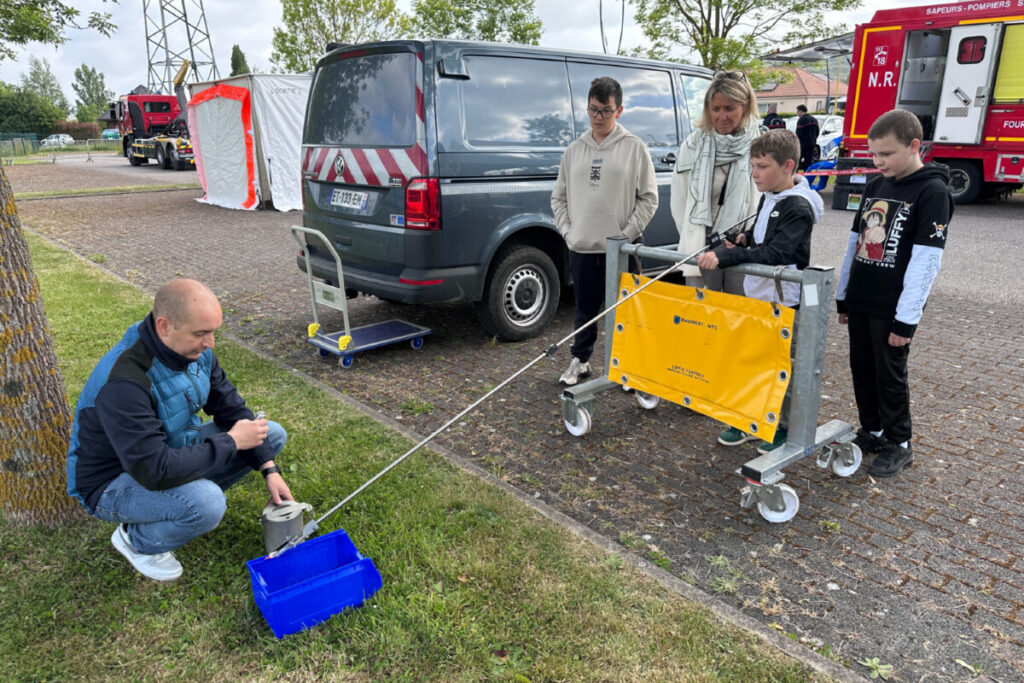
Measurement drones, hands-on radioactivity measurements, nuclear accidents and climate change… On 10 October, the French Authority for Nuclear Safety and Radiation Protection will open its headquarters to the general public for the first time. An initiative that may appear informal, but which forms part of a much deeper history: that of transparency becoming, over the past twenty years, an integral component of nuclear safety in France.
Open days at nuclear power plants, laboratories or factories are familiar events. Those held by a regulatory authority are less common. Yet on Saturday 10 October, the French Authority for Nuclear Safety and Radiation Protection (ASNR) will welcome the general public to its headquarters in Montrouge, south of Paris, for the first time. Organised as part of France’s National Resilience Day, the event aims to provide a behind-the-scenes look at nuclear safety and radiation protection.
For an authority often associated with inspections, technical decisions and expert assessments, the programme also takes a very practical approach. Visitors will notably be able to discover the vehicles, drones and robots used to measure radioactivity or potential contamination. The OpenRadiation project will also give them an opportunity to measure environmental radioactivity themselves.
Games, quizzes, multimedia activities and an exhibition on radioactivity, its uses, risks and effects on health and the environment will also be available. ASNR experts will be on hand to engage directly with visitors.
From Chernobyl to climate change
For those wishing to explore the subjects in greater depth, ASNR has also scheduled several conferences. The topics provide a good overview of the breadth of its responsibilities: how a nuclear power plant works, lessons learned from the Three Mile Island, Chernobyl and Fukushima accidents, nuclear safety in the face of climate change, and how the French public perceives the risks associated with radioactivity.
The exercise therefore involves more than simply displaying a few measuring instruments. It is also an opportunity to explain how an independent authority approaches issues that are often technical, sometimes sensitive, and which the public generally encounters only in the context of an incident, a controversy or a major debate on nuclear power.
This first open day also comes at a symbolic moment. This year, France marks the twentieth anniversary of the Act of 13 June 2006 on Transparency and Security in the Nuclear Field, better known as the TSN Act.
Twenty years of nuclear transparency
The term “transparency” is not simply a concept used by stakeholders in the sector. In its first article, the TSN Act provided a precise definition: all provisions taken to guarantee the public “reliable and accessible” information concerning nuclear security. It also established everyone’s right to be informed about the risks associated with nuclear activities and their impacts on health, safety and the environment.
The 2006 Act profoundly shaped the French framework. In particular, it created the Nuclear Safety Authority as an independent administrative authority, gave Local Information Committees (CLIs) a statutory basis, and created the High Committee for Transparency and Information on Nuclear Security (HCTISN).
Twenty years later, ASNR, created in 2025 through the merger of ASN and IRSN, sees itself as continuing this approach. It publishes its decisions, opinions and inspection follow-up letters, while developing consultations, exchanges with stakeholders and mechanisms for dialogue with society. In a statement published in June to mark the twentieth anniversary of the TSN Act, ASNR, HCTISN and ANCCLI went even further: according to them, “transparency is not an add-on to safety: it is a condition for it”.
The issue also concerns the entire nuclear sector. Operators are themselves subject to information requirements, while the CLIs provide local monitoring, scrutiny and public information around nuclear facilities. Nuclear transparency in France has therefore gradually developed as a system involving the regulatory authority, operators, experts, elected representatives, associations and citizens. ■