
Nuclear power, heatwaves and electricity consumption: RTE’s key takeaways from summer 2026
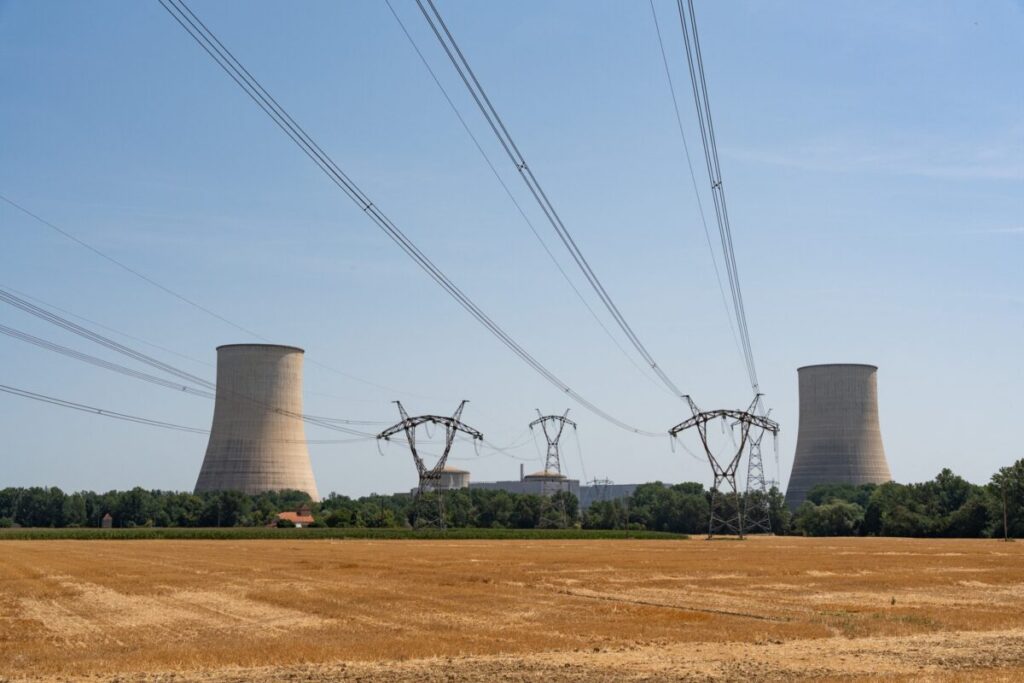
Three heatwaves, persistent drought, up to fifteen reactors affected simultaneously and hydropower generation at a low point: summer 2026 had all the characteristics of a full-scale test for the French power system. Yet the system was never placed under significant strain. In an initial analysis published in September, RTE describes a system that remains in substantial surplus, while its operation is evolving under the effects of climate change.
Despite heatwaves that were exceptional in their early onset, intensity and duration, as well as persistent drought, the French power system made it through the summer without any security-of-supply difficulties. The high level of low-carbon generation capacity relative to demand made it possible to absorb the disruptions that simultaneously affected nuclear power, hydropower, wind generation and the grid. In its report, RTE draws six initial conclusions from this exceptional summer.
-
The power system never ran short of margins
This is RTE’s main conclusion: the heatwaves did not put France’s electricity supply under strain. Even at the height of the constraints affecting generation, France still had available capacity that could be called upon.
This situation contrasts with 2022, when nuclear fleet availability was historically low, hydropower generation was reduced and gas prices soared. Since then, the recovery in nuclear generation and the development of renewables have significantly increased system margins.
Thomas Veyrenc, CEO of RTE, referred in a comment published on LinkedIn to a “structural situation of abundant generation” that played a protective role. For the most part, the effects of the heatwave and drought had been correctly incorporated into RTE’s forecasts. Only the massive influx of jellyfish affecting the Gravelines nuclear power plant remained difficult to anticipate.
-
Nuclear power was affected, but generation remained resilient
Climate-related constraints on the nuclear fleet reached an unprecedented level. On 17 August, between 3 a.m. and 10 a.m., unavailable capacity linked to heat, drought and jellyfish peaked at 13.4 GW. Fifteen reactors across eight nuclear power plants were affected simultaneously.
RTE estimates that the maximum gap between theoretical generation potential and actual generation during these periods was around 10 TWh. However, this estimate includes outages that may have occurred even in the absence of climate-related events. This level is well above previous records: 6 TWh in 2003 and 3 TWh in 2020.
Nevertheless, nuclear generation did not collapse. It reached 83.7 TWh between June and August, compared with 83.5 TWh in 2024 and 84.4 TWh in 2025. Nuclear power accounted for around 67 % of French electricity generation and the equivalent of 84 % of consumption over the period.
This apparent contradiction can be explained by the fleet’s very good availability outside the heatwave periods. High levels of temporary unavailability were therefore offset by strong generation during the rest of the summer.
-
Wind generation lacked momentum, while solar withstood the heat
Renewables delivered mixed results. Wind generation reached 8.9 TWh, compared with 8 TWh in 2025 and 6.7 TWh in 2024. However, this increase was partly due to growth in installed capacity.
Over the summer as a whole, the capacity factor for onshore wind stood at 14.4 %, close to the average for the previous six summers. However, output was low during the first heatwave: the capacity factor fell to 9.4 % for onshore wind and 13.6 % for offshore wind.
The situation improved during the following two heatwaves. RTE therefore observes that wind generation is statistically lower during periods of extreme heat, although the relationship is not systematic. “Those who favour simple causal relationships will be disappointed,” Thomas Veyrenc noted.
Solar generation, meanwhile, reached 15.1 TWh, compared with 12.5 TWh during summer 2025. This increase was mainly due to the rapid expansion of installed capacity, which grew by 21.3 % in one year, as well as a particularly sunny July.
High temperatures slightly reduce the efficiency of photovoltaic panels, particularly above 25 °C. RTE’s data do indeed show a slightly lower capacity factor, for comparable levels of sunlight, on the hottest days.
Hydropower suffered more significantly from the drought. Generation fell to 10.8 TWh, the second-lowest level recorded in fifty years for the June-August period, behind 2022. At the end of August, hydro reservoir stocks stood at only 2.1 TWh, their lowest level for that time of year since the series began in 2015.
-
Sustained electricity consumption, with the peak shifting later
Driven by high temperatures and air-conditioning use, gross electricity consumption rose by 4 to 5 % in June and July compared with 2025. It therefore returned to a level close to that seen in the 2014-2019 period, although French electricity consumption has generally remained below that reference level since the health and energy crises.
The summer peak remained contained at around 60 GW, a level comparable to 2019 and well below the winter peak of close to 90 GW in January 2026. At this stage, RTE has not observed a significant increase in average temperature sensitivity: above 25 °C, each additional degree still results in an increase in consumption of between 0.7 and 1.1 GW, depending on the time of day.
However, the consumption profile is changing. The maximum temperature sensitivity, previously observed in the late afternoon, is shifting towards the early evening. RTE attributes this in particular to increased use of air conditioning in homes to dissipate heat accumulated during the day. Nevertheless, the evening peak remains slightly lower than the midday peak.
-
France exported electricity 99.9 % of the time
Between June and August, France’s net electricity exports reached 23.7 TWh, slightly below the levels recorded in the summers of 2024 and 2025, but still very high.
Over the three-month period, France was a net importer for only nine 15-minute periods, representing just over two hours and only 0.1 % of the time. These imports reflected economic opportunities: generation capacity remained available in France.
Nuclear unavailability, low hydropower generation and periods of weak wind output therefore did not eliminate the French system’s structural surplus. Domestic low-carbon generation was sufficient to cover consumption on almost every day of the summer.
Use of fossil-fuelled power plants nevertheless increased, with generation reaching 4.1 TWh compared with 2.6 TWh in 2025. More than 90 % came from gas, while coal generation remained almost absent. Gas-fired power plants mainly operated in the evening, when solar generation declined while electricity consumption linked to air conditioning remained high. According to RTE, they primarily served demand in neighbouring countries and helped avoid the start-up of more expensive European power plants.
-
France’s generation surplus did not prevent prices from rising
Despite substantial generation margins and large electricity exports, power prices rose sharply. The French spot price averaged EUR 95.2/MWh in July and EUR 122.8/MWh in August, the second-highest levels ever recorded for those months, behind 2022.
According to RTE, this increase was primarily due to soaring gas prices caused by the conflict in Iran and the closure of the Strait of Hormuz. It also reflected stronger convergence between French prices and those in neighbouring countries, particularly Germany, Belgium and Italy, which are more dependent on gas-fired power plants.
France’s competitive advantage nevertheless remained. On forward markets, the price differential with Germany remained around EUR 40/MWh in France’s favour. Prices therefore increased across Europe, without calling into question the relative competitiveness of the French power system.
This operating experience will now feed into the update of the Energy Pathways to 2050 and the climate stress tests conducted by RTE. While the French power system made it through summer 2026 without major difficulty, the conditions it faced are expected to become less exceptional. For its part, EDF has for several years been deploying the Adapt programme, designed to strengthen the resilience of the existing nuclear fleet to the effects of climate change, particularly rising temperatures and lower river flows. Future reactors are also being designed with this new context in mind. EPR2 reactors located on rivers will benefit from advanced solutions designed to limit thermal discharges. ■
By Ludovic Dupin, RGN journalist
Image: Golfech nuclear power plant – ©JEAN-MARC BARRERE / HANS LUCAS / HANS LUCAS VIA AFP