
Nuclear reactors beyond 60 years: ASNR consults the public on continued operation
Can the French nuclear fleet operate beyond 60 years? In its draft opinion submitted for public consultation, ASNR provides an initial answer: it “has not identified, based on current knowledge, any obstacle to the continued operation of nuclear power reactors beyond 60 years that EDF would have no means of addressing”.
This conclusion opens up prospects for EDF’s existing reactors, most of which were commissioned in the 1980s. However, it does not constitute either a general authorisation or definitive approval for each facility. Continued operation will remain subject to inspections and periodic safety reviews on a reactor-by-reactor basis.
Sensitive components to be monitored
Requested by ASN in 2022, EDF’s analysis focuses mainly on the period beyond 60 years. It examines the ageing of components that are difficult to replace, the effects of increased power modulation and the consequences of climate change.
The reactor pressure vessel is a major issue. In particular, the utility proposes heating the safety injection water to limit thermal shocks and/or refining its calculation methods. ASNR considers these approaches acceptable in principle, but is requesting additional tests and supporting evidence.
Other components also require further studies or enhanced monitoring, including certain elbows in the primary circuit, electrical cables and the integrity of containment structures. The aim is to better characterise potential defects and confirm the durability of repair solutions.
Uncertainties to be clarified
According to ASNR, neither increased modulation of nuclear generation nor climate projections reveal any fundamental obstacle to the continued operation of EDF’s reactors. However, several points still require further investigation.
Reactors are, and will increasingly be, called upon to adjust their output. “French nuclear reactors have always been accustomed to modulating, in other words varying their level of output, but this phenomenon is increasing with the arrival of renewables,” said Pierre-Marie Abadie, Chairman of ASNR. EDF’s initial studies do not show any major impact on the components that are most difficult to replace, but these findings still need to be consolidated.
Adapting nuclear power plants to climate change is also among the issues being examined by ASNR. “This is perhaps the area where there are more long-term uncertainties, because scientific knowledge of the impact of climate change evolves over time,” explained the head of the safety authority. ASNR is therefore asking for more detailed analyses of the consequences of droughts, rising water temperatures, pressure on water resources and the feasibility of the adaptations under consideration.
An issue shared internationally
The long-term operation of nuclear power plants is being examined in several countries, notably because of its economic benefits. According to the OECD, in its report The Costs of Generating Electricity 2025, long-term operation of existing nuclear power plants is among the most competitive electricity generation options.
In the United States, some reactors are licensed to operate for up to 80 years, following two successive extensions of their initial licences. In Finland, the two Loviisa reactors received an extension of their operating licences in 2023 until the end of 2050, corresponding to around 70 and 73 years of operation depending on the unit. ■
By Thomas Jaquemet, Sfen
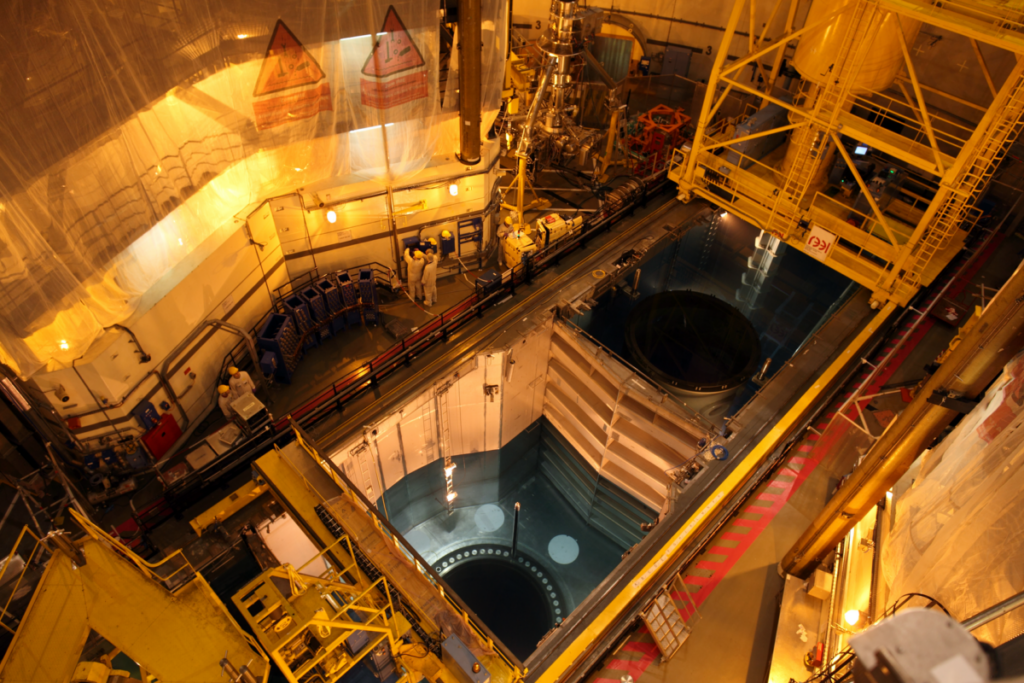
Image: Reactor pressure vessel inspection during the ten-year inspection of Unit 3 at the Cattenom nuclear power plant, February 2011. – ©EDF/Jean-Luc Petit