
EDF Net Zero 2050 scenario: electrification and nuclear are essential for Europe
On the occasion of the publication of the new edition of its Net Zero 2050 scenario, EDF recalls that massive electrification of end uses is essential to reconcile competitiveness, sovereignty and decarbonisation in Europe.
With the publication of its new Net Zero 2050 scenario, EDF outlines the levers required to achieve carbon neutrality in Europe by 2050. In a tense global political context, this electrification is all the more urgent. It would enable Europe to strengthen its resilience to oil and gas price fluctuations, reduce its dependence on fossil fuel imports by 85%, and aim for net zero carbon emissions. According to EDF, this carbon neutrality relies on four complementary pillars: energy efficiency and sufficiency, massive electrification of end uses, fully decarbonised electricity generation, and the decarbonisation of remaining energy carriers.
“We must make decisions today in order to improve the situation in the future,” warns Fabrice Noilhan, Director of Strategy at EDF. The company has therefore established four recommendations “to identify the most accessible opportunities to accelerate electrification,” he explains.
-
Prioritising the most cost-effective decarbonisation actions without delay
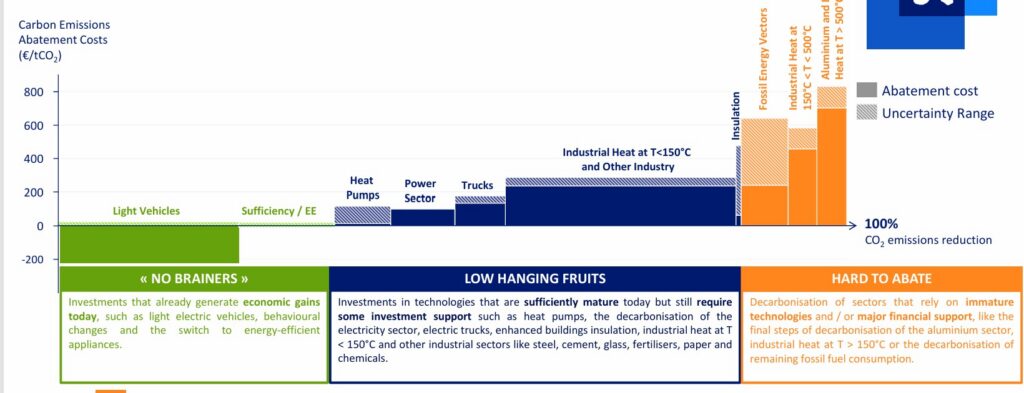
EDF suggests prioritising decarbonisation actions based on their cost per tonne of CO₂ avoided and their level of maturity. Some solutions are already clear choices: light electric vehicles and energy efficiency measures already generate economic benefits today. These are the fastest and most cost-effective levers to deploy. Next come technologies that are already mature but still in the deployment phase, such as heat pumps or electric trucks. They offer strong emissions reduction potential but still require investment and targeted support to accelerate their uptake. Finally, the most difficult sectors to decarbonise include aluminium production and high-temperature heat above 500°C.
-
Accelerating electrification
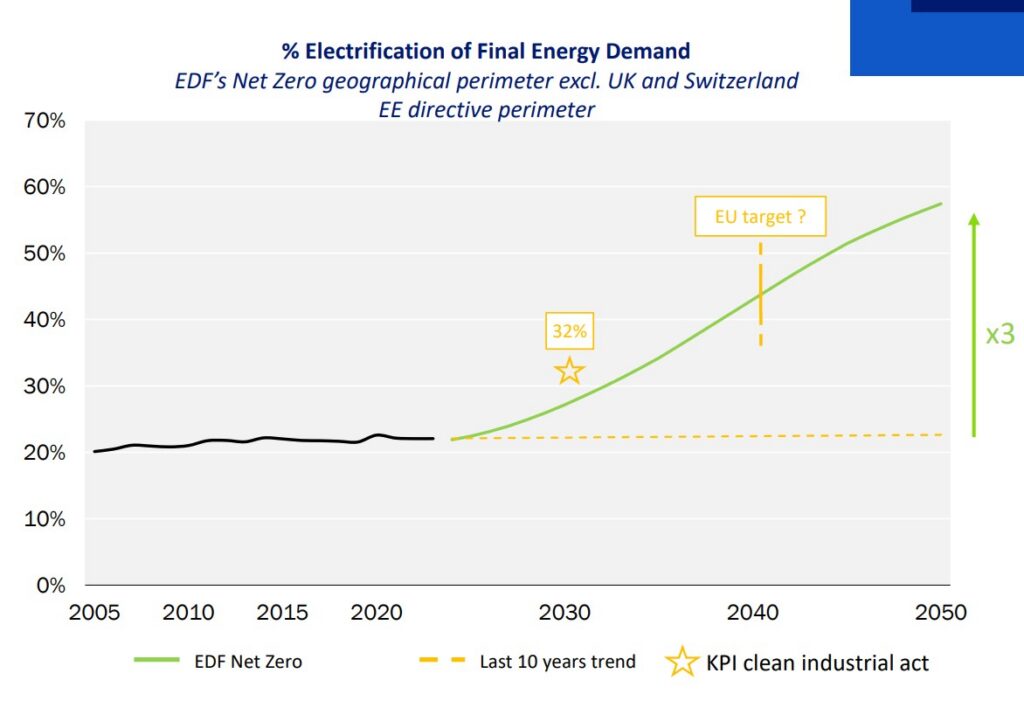
“We are convinced that electrification is the cornerstone of Europe’s energy future,” states Fabrice Noilhan. “It improves competitiveness, reduces dependence on imports and supports carbon neutrality.” Currently, electricity represents only 23% of the European energy mix. By 2050, EDF aims for 60%. This objective shows “how much we need to accelerate the pace, especially after decades of stagnation,” he acknowledges. The remaining 40% of final energy consumption will come from other decarbonised energy carriers, notably district heating networks (around 8%) and biomass (around 10%).
-
Promoting the development of nuclear energy
EDF calls for the role of nuclear energy to be fully recognised. “Nuclear power is dispatchable and net zero. It ensures a reliable electricity supply 24 hours a day and complements renewable energy as demand increases,” recalls Fabrice Noilhan. “It also provides essential system services: inertia, voltage control and frequency stability,” he adds.
For EDF, it is essential to provide the nuclear sector with an appropriate policy and financial framework to enable large-scale deployment. Access to financing must also be facilitated by upholding the principle of technological neutrality, in order not to exclude nuclear from support mechanisms. Finally, sustained efforts must be devoted to skills development and research and development in advanced nuclear technologies, covering the entire value chain: design, construction, operation, and management of facilities and fuel.
In the same vein, Sfen recently published a study (carried out by Aurora Energy Research) demonstrating the “insurance value” of the French nuclear fleet: it not only contributes to reducing wholesale prices and CO₂ emissions in France, but also benefits neighbouring countries through interconnections.
-
Adopting a systemic European approach by improving coordination of national strategies
“Energy systems must work together to achieve three objectives: carbon neutrality by 2050, securing supply with a balanced investment between generation and consumption, and cost efficiency,” lists Fabrice Noilhan. EDF highlights the importance of a coordinated approach at the European level by assessing the impacts of a lack of alignment between Member States. The chart below illustrates what would happen if countries acted in isolation rather than in a coordinated approach based on common interest. In such a scenario, the share of renewable energy would increase, but at the cost of a more expensive overall system, with a greater need for public support.
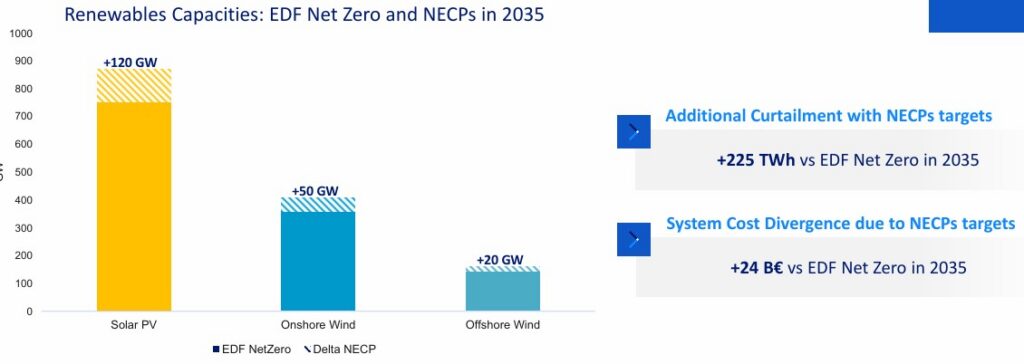
A lack of coordination would make the European system less efficient, more costly and less reliable. Conversely, better coordination of investments would avoid unnecessary overcapacity and significantly reduce the total cost of the energy system for all Europeans. ■
By Floriane Jacq (Sfen)
Image: Low-angle view of the EDF sign at the entrance of the Nogent-sur-Seine nuclear power plant and its two cooling towers © olrat