
Orano Med inaugurates new R&D center dedicated to lead-212 targeted alpha therapy
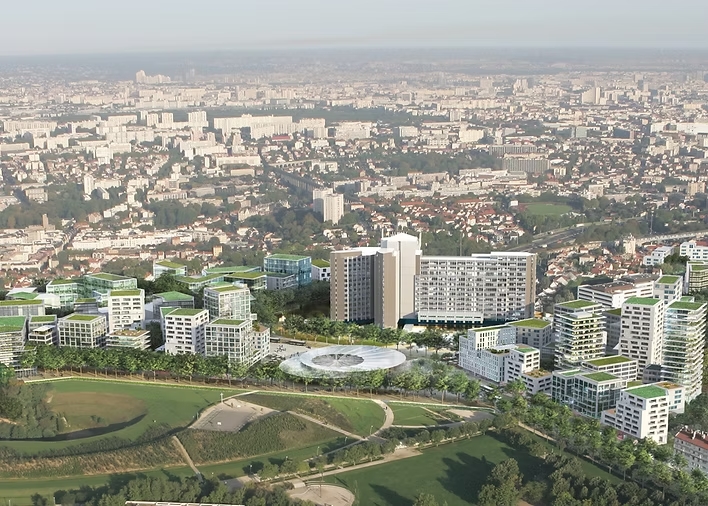
Orano Med has inaugurated a new research and development center in Villejuif dedicated to lead-212 targeted alpha therapy. Located within the Paris-Saclay Cancer Cluster, the Orano Group subsidiary aims to leverage this oncology innovation ecosystem to accelerate the identification and development of new targeted cancer treatments.
On May 18, 2026, Orano Med inaugurated its new headquarters and research and development laboratory in Villejuif. The new 700 m² facility is located within the Paris-Saclay Cancer Cluster (PSCC), a biomedical research and oncology innovation initiative launched in 2022 as part of the France 2030 investment programme. At its launch, the French government committed €100 million in funding over a ten-year period. By joining this ecosystem, Orano Med will benefit from a research environment designed to identify new drug candidates and facilitate their development.
“This inauguration marks an important milestone in the development of a promising activity for the Group. […] It also reflects our ambition to improve treatment options for patients with unmet medical needs through a new generation of lead-212 targeted alpha therapies,” explained Nicolas Maes, CEO of Orano.
Four drug candidates in advanced development
Orano Med develops targeted radionuclide therapies for the treatment of cancer. More specifically, its work focuses on lead-212 targeted alpha therapies. The company has built a diversified portfolio of treatments combining a biological targeting vector with lead-212, an alpha-emitting radioisotope capable of destroying cancer cells while limiting radiation exposure to healthy tissues.
The new Villejuif facilities will be primarily dedicated to the development of new targeting vectors (peptides, antibodies, etc.) used to identify specific cancer cell types. These potential candidates will then be transferred to Orano Med’s laboratory in Plano, Texas, for preclinical studies, including in vitro and in vivo characterization.
The company currently has four therapies undergoing clinical trials in humans. AlphaMedix, developed in partnership with Sanofi and RadioMedix, targets neuroendocrine tumors. It is the most advanced programme and has already entered Phase 2 clinical trials, involving larger patient populations to assess efficacy and further refine the safety profile. The three other treatments, developed either internally or with partners, are currently in Phase 1 clinical trials, which are primarily designed to evaluate treatment safety in humans.
Operating under tight time constraints
The development of these therapies presents several manufacturing and distribution challenges. First, radioisotopes such as lead-212 have a very short half-life of 10.6 hours. They cannot be stockpiled and must therefore be transported and administered rapidly. This requires a reliable and tightly controlled value chain. Second, developing a new medicine takes an average of 15 years and costs approximately €2 billion. During the inauguration event, Philippe Baptiste, French Minister for Higher Education, Research and Space, praised the commitment of industrial companies and biotechnology firms willing to assume risks associated with such long development timelines. ■
By François Terminet (Sfen)
Image: Aerial view of the Paris-Saclay Cancer Cluster, Source: PSCC