
[Complexity and safety] Increasing the number of rules comes at the expense of overall understanding
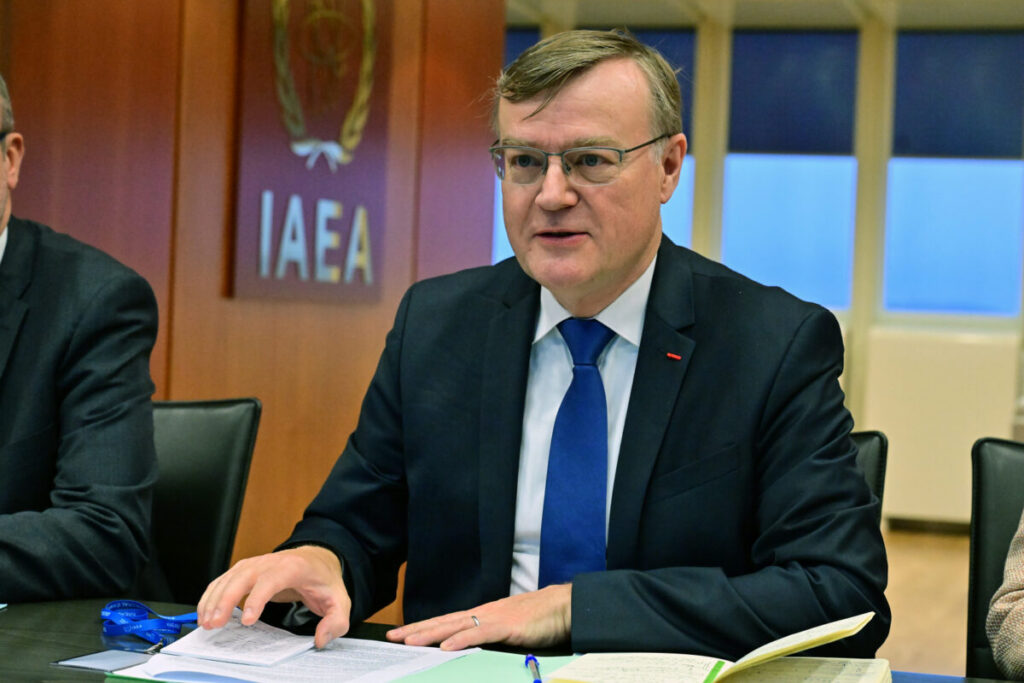
Can the accumulation of requirements ultimately undermine nuclear safety? The President of the French Authority for Nuclear Safety and Radiation Protection (ASNR) analyses the effects of complexity on nuclear power plant operation. He discusses the overhaul of the General Operating Rules (RGEs) and the need to address this issue from the design stage of future EPR2 reactors.
In your 2025 report published last spring[1], you highlight the growing complexity of operating nuclear facilities. How does this manifest itself?
Operators report growing complexity in their activities. This complexity can have adverse effects on safety – increasing the risk of error, loss of understanding of the purpose of requirements, or reduced ability to act. However, complexity remains a phenomenon whose consequences are difficult to characterise, with diffuse effects across organisations and activities.
Does the accumulation of requirements and operating experience feedback alone explain this complexity, or are there deeper causes relating to operators’ organisational structures, management or even ASNR oversight?
Complexity has multiple origins, primarily within operators themselves, while others arise directly or indirectly from ASNR oversight. In recent years, one factor in the growth of complexity has been the gradual expansion of the scope covered by the safety case, particularly as part of periodic safety reviews. The fourth periodic safety review of EDF’s reactors is a good illustration. It has led to significant improvements in reactor safety levels, but also to greater complexity in their operation.
EDF’s organisational structure, which enables it to benefit from economies of scale across its nuclear fleet, can also generate complexity, particularly because of silo effects or the distance between engineering departments and operations in the field. One of the main areas of work in the EPR2 programme is therefore to take operators’ operational issues into account from the design stage.
Cultural traits and cognitive biases are also at work. Operating experience feedback most often results in the addition of new rules developed in response to the event that occurred. However, their indirect consequences are not always sufficiently assessed. In this respect, it is essential for each organisation to have people with an overall view of the issues, in order to avoid focusing on one issue at the expense of safety as a whole.
Finally, some trends cut across society, and technological advances, particularly in information technology, have made it possible to create higher-performing but also more complex systems.
At what point can excessive regulatory complexity become a risk factor for operations and nuclear safety?
Rules are essential to the operation of high-hazard industries. Nevertheless, they cannot cover every situation and can sometimes prove unsuitable. Moreover, increasing the number of rules comes at the expense of overall understanding and of the ability of those required to implement them to fully assimilate each one. A balance must therefore be found between “rule-based safety” and “managed safety”, the latter relying on the competence of personnel. More generally, the scale and complexity of the operating baseline requirements must not impair personnel’s ability to analyse the situations they encounter.
You have referred several times to the General Operating Rules as a major area of work. What particular difficulties do you currently observe in this area, and what objectives are you pursuing in developing them?
The complexity of the reactor operating baseline requirements, and particularly the General Operating Rules (RGEs), is real. It is regularly highlighted as potentially causing operators to lose sight of the meaning of their work and having negative effects on risk control.
This complexity has increased significantly since the reactors first entered operation. The consideration of new accident scenarios, particularly during the fourth periodic safety review of the reactors, has resulted in the addition of equipment carrying new operating requirements.
EDF has therefore initiated short- and medium-term simplification measures, as well as a long-term project for a comprehensive overhaul of its RGEs, known as “RGE du futur”. EDF has just submitted the first part of the file, with the remainder expected by the end of 2026. ASNR is expected to issue its position on this overhaul in early 2029. This is a major undertaking, with significant organisational and human factors implications for operating teams, which will have greater latitude but also increased responsibility. ASNR will therefore pay particular attention to managing and supporting the transition to these new RGEs.
What initiatives has ASNR launched or supported to better understand and manage complexity?
The Steering Committee for Social, Organisational and Human Factors (COFSOH), which brings together operators, trade unions, NGOs and experts, devoted two days of discussion to the subject in 2024. This work made it possible to establish a common vocabulary, analyse the different forms and dynamics of complexity, and examine ways of addressing them based on concrete situations experienced in nuclear facilities. A summary was published in 2025, and COFSOH will continue this work in 2026.
ASNR is also currently funding academic research on the parameters and dynamics of complexity in the governance of reactor safety in France. The Authority is also participating in the “managing the simplification process” strategic analysis conducted by the Foundation for an Industrial Safety Culture (FonCSI), which aims to re-examine the relationship between safety management and its proceduralisation.
More generally, managing complexity is a priority for ASNR in the coming years. It therefore plans to raise staff awareness of the issues associated with complexity and to improve the way these issues are taken into account in its expert assessments, regulatory reviews and inspections.
You have emphasised the importance of linking EPR2 to the work on the RGEs. How can future reactors avoid reproducing the mechanisms that have led to greater complexity in the current fleet?
The EPR2 reactor is more complex than reactors of the previous generation, with more safety trains, EDF’s intention to carry out online maintenance, etc. This makes the consideration of complexity an issue of greater importance. Nevertheless, I believe that the levers to be used to manage complexity are of the same nature as for the other reactors in the fleet.
There is a significant cost associated with changing the approach to the RGEs, and that cost will be even greater for a new reactor design. It is therefore important for EDF to fully take EPR2 into account in the “RGE du futur” so that these rules can be integrated from the actual start-up of the future reactors.
In this work, what roles can operators and the various players in the value chain play?
Operators and front-line personnel are the ones who experience complexity on a daily basis. Likewise, managing complexity is a key element in the performance of industrial projects and must be taken into account from the design stage. Operators have already launched initiatives to manage or reduce the complexity of their activities. This work must continue. Moreover, the oversight we exercise can, directly or indirectly, be a source of complexity. In this context, I believe it is essential to continue the dialogue between ASNR and industry on this subject, in order to deepen our understanding of the effects of our oversight.
Several countries (United States, United Kingdom) are seeking to simplify their regulatory processes to accelerate their nuclear projects. What good practices, but also what points requiring vigilance, do you draw from these experiences?
It is normal, when launching a major industrial programme, for countries to consider how its implementation can be facilitated. In France, this notably resulted in the Act of 22 June 2023, which simplifies, accelerates and secures authorisation processes. The Government is currently working on legislative measures aimed at simplifying oversight of environmental risks associated with construction work. Since last autumn, in conjunction with the Interministerial Delegation for New Nuclear Power (DINN), we have initiated discussions with EDF and Orano on their ongoing projects. Their purpose is to identify the specific issues associated with new nuclear build and the best way to take them into account. ■