
Cigéo: public inquiry opens, key points with Lydie Évrard (Andra)
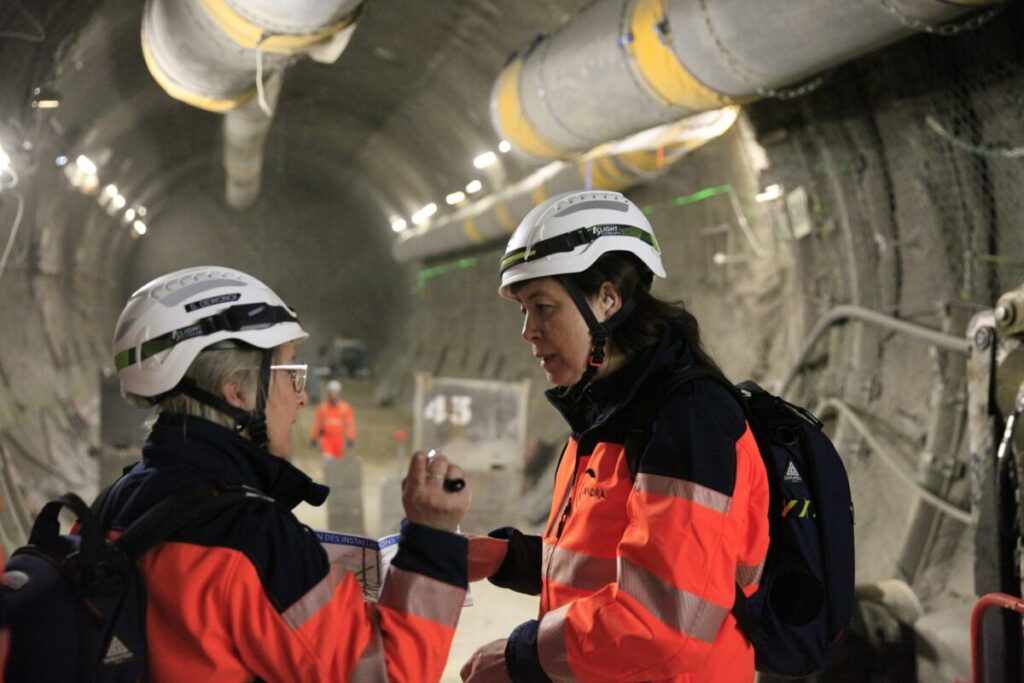
At the opening of the public inquiry into the construction licence application for Cigéo, the RGN looks back at the main takeaways from the interview given last April by Lydie Évrard, Chief Executive Officer of Andra. An opportunity to shed light on the technical, industrial and societal challenges of a project intended to structure radioactive waste management in France over the long term.
From Monday 18 May 2026 until 2 July, all citizens are invited to express their views on the construction licence application for Cigéo, the French geological disposal programme for radioactive waste. Last April, the RGN interviewed Lydie Évrard, CEO of Andra, which is leading the project. Recalling that geological disposal is the international reference solution, she stressed that it is an essential project for France. Some key points from the interview.
On the technological reference solution
“Cigéo is an essential infrastructure for […]. Current interim storage is only a temporary solution: only deep geological disposal makes it possible to ensure the long-term protection of people and the environment for this type of waste. Today, it is the reference solution recognised internationally and included in IAEA safety standards.”
On the safety of the facility
“Safety relies on the characteristics of the geological environment and on the very design of the repository – robust waste packages, placed 500 metres underground in an impermeable clay layer, ensuring long-term containment of radionuclides over hundreds of thousands of years. This is what is known as passive safety, which does not depend on long-term human action. It combines engineered barriers and particularly favourable geological characteristics.”
On dialogue with civil society
“It is essential that we provide civil society with the most comprehensive answers possible to address its questions […]. Public debates make it possible to place the project within a broader vision of radioactive waste management and to better understand expectations in order to respond more effectively. Key concepts such as the ‘industrial pilot phase’ or ‘reversibility’ are directly derived from consultations with civil society. Informing the public about radioactive waste management is one of the missions entrusted to Andra by law. Our responsibility is to explain with pedagogy, clarity and humility what we know, what we do not yet know, what the project is and what it is not. The aim is to enable everyone to form their own opinion.”
On the transition to the industrial phase
“The next major step will be the public inquiry, scheduled for spring 2026, followed by preparation of the construction licence decree, which will be issued after consultation with the Council of State. This will be followed by the construction phases, excavation works and then commissioning, defined as the disposal of the first waste package, by around 2050. The industrial pilot phase will make it possible to confirm the reversible nature and the safety case of the facility, notably through an in situ testing programme, and to progressively gain operational experience in repository operation.”
On intergenerational transmission
“Leading a multi-generational project also means organising the transmission of skills, knowledge, memory, but also safety values and responsibility towards future generations. Cigéo is not a project that one ‘finishes’; it is a project to which one commits, contributes and passes on.”
Find the full interview with Lydie Évrard here. ■
By Ludovic Dupin, Sfen
Image: Lydie Évrard, CEO of Andra, visiting the Bure underground laboratory – © Andra