
Beyond 60 Years of Operation, Simplification and EPR2: ASNR’s Key Nuclear Safety Priorities
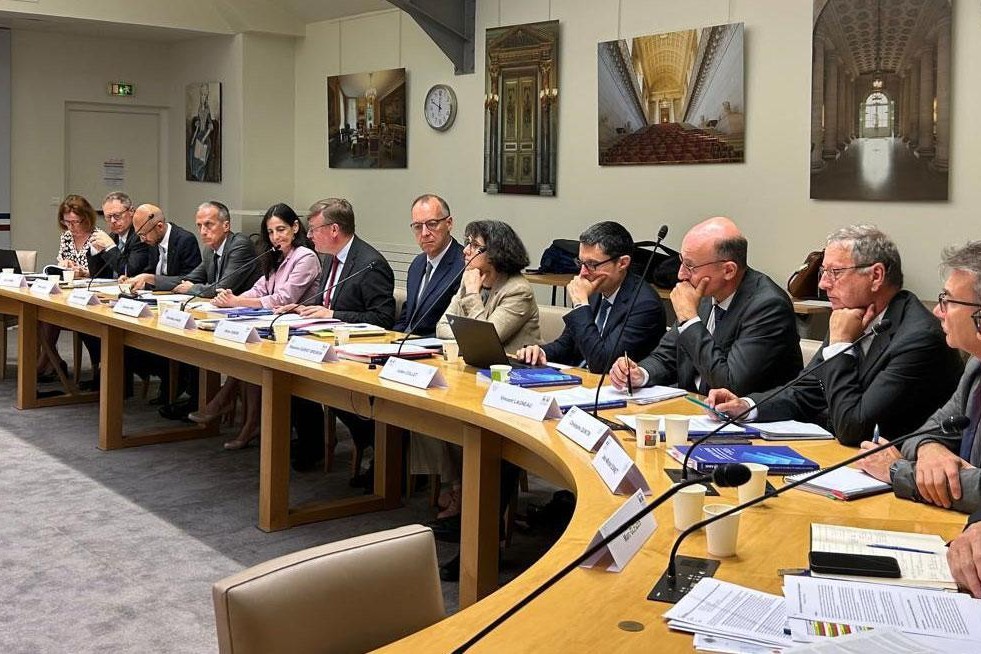
The first report presented since the creation of the Nuclear Safety and Radiation Protection Authority (ASNR), the 2025 review of nuclear safety in France marks the launch of several structuring initiatives. Stabilisation of safety objectives for 900 MWe reactors, consideration of operation beyond 60 years, simplification of General Operating Rules, preparation for EPR2 reactors, and renewal of back-end fuel cycle facilities: the Authority used its hearing before the Parliamentary Office for the Evaluation of Scientific and Technological Choices (OPECST) to clarify its vision of the challenges ahead.
Presented on 28 May before OPECST, the annual report on the state of nuclear safety and radiation protection is an important event for the nuclear sector each year. The 2025 edition carries particular significance, as it is the first exercise conducted by the Nuclear Safety and Radiation Protection Authority (ASNR), created following the merger of ASN and IRSN.
While the report confirms that the safety of French nuclear facilities remained at a generally satisfactory level in 2025, the hearing above all provided ASNR with an opportunity to share its vision of the major challenges facing the sector in the years to come.
“Two industrial challenges lie ahead”
Opening the hearing, ASNR Chairman Pierre-Marie Abadie summarised the challenges facing the French nuclear sector: “Two industrial challenges lie ahead of us: the continued operation of existing reactors and innovation, as well as the construction of new facilities.” According to him, these two undertakings must rely on the same fundamentals: anticipation, attention to weak signals, and the ability to benefit from the historical standardisation of the French nuclear fleet.
Fifth periodic safety review: toward stable safety objectives
One of the most significant messages from the hearing concerns preparation for the fifth Periodic Safety Review (PSR) of the 900 MWe reactors. Commissioner Olivier Dubois explained that ASNR established in 2025 the general orientations that will guide these fifth reviews. This is an important development: unlike previous reviews, the objective will not be to undertake a new general increase in safety objectives.
“ASNR took a position in 2025 on the orientations to be retained for the fifth safety review with a view to a possible continuation of operation from 50 to 60 years. The priorities defined at this stage are the management of equipment ageing and the consideration of the effects of climate change. All this within a framework of safety objectives stabilised compared with the previous periodic review. This is an important point that marks a significant difference from the fourth periodic reviews, during which safety objectives were raised.”
Beyond 60 years: ASNR aims to inform decision-makers
The other major topic concerns the possibility of operating reactors beyond 60 years. Pierre-Marie Abadie confirmed that: “ASNR has launched a generic approach regarding operation beyond 60 years, particularly concerning non-replaceable components. This is an important first input for safety, for EDF and for energy policy. We will issue our opinion at the end of 2026.”
For his part, Olivier Dubois provided details on the work carried out since 2023: “The energy context suggests strong interest in extending the operation of these reactors beyond 60 years. In this context, ASN and subsequently ASNR wished, starting in 2023, to engage with EDF in a forward-looking approach aimed at identifying the safety-related technical constraints that could prevent such an extension.”
“A review of potential obstacles was carried out and EDF proposed a set of strategies and actions to remove these constraints on major technical topics, often concerning what are referred to as non-replaceable components. ASNR will take a position on these matters in autumn 2026.”
“From a nuclear safety perspective, the objective is to provide energy policy stakeholders with general assumptions regarding the possible operating lifetime of these reactors.”
EPR2: “a much more mature design than Flamanville”
Construction of the future fleet represents the other major challenge identified by the Authority. For Pierre-Marie Abadie, the success of the EPR2 programme depends largely on the ability to preserve a logic of standardisation. “The challenge is standardisation and replication. Standardisation is good for quality and safety. To achieve it, anticipation, stability of technical reference frameworks and strong control of suppliers and subcontractors are required.”
The ASNR Chairman also expressed confidence regarding the maturity of the project: “At this stage, we are dealing with a design that is much more mature than Flamanville was at the same point in the process.”
VC1: the first major industrial milestone for the Flamanville EPR
The hearing also provided an opportunity to shed light on the challenges associated with the first comprehensive outage of the Flamanville EPR, scheduled to begin in October 2026. During the press briefing following the hearing, Olivier Dubois described a project of exceptional scale:
“This first outage for fuel replacement, which is scheduled to begin in October 2026, will be a large-scale project involving numerous maintenance operations, tests and modifications. EDF will carry out the first complete requalification of the Reactor Coolant System through a hydrostatic pressure test. It will replace the entire reactor core, replace the reactor vessel head, and replace the heat exchangers between the intermediate cooling circuit and the raw water circuit, which had been undersized during the reactor’s design phase. It will also perform activities that could not be completed before the reactor entered operation.”
The Authority also highlighted the importance of the regulatory inspections that will take place during this outage: “Certain pressure-retaining components will reach their regulatory inspection deadlines, which will generate a peak workload for EDF and for inspection organisations. EDF has already approached ASNR to explore postponing certain activities and smoothing the workload during this first outage.” Such an approach is all the more logical given that VC1 will represent a peak of activity not only for EDF but also for all inspection bodies involved.
Back-end fuel cycle: a change of scale for safety assessments
Pierre-Marie Abadie devoted a substantial part of his remarks to Orano’s Aval du Futur (Back-End of the Future) and Pérennité-Résilience programmes. “The Back-End of the Future programme is about preparing the future of back-end fuel cycle facilities, providing additional margins for the storage of spent fuel and plutonium-bearing materials. These facilities are planned for around 2040 and are intended to enable the renewal of industrial facilities, beginning with Melox and then La Hague.”
Regarding the Pérennité-Résilience programme, which aims to maintain current facilities until that timeframe, the Chairman referred to lessons learned in recent years, particularly from challenges encountered at Melox: “These lessons concern strengthening maintenance and increasing redundancy. This is an issue of industrial robustness, but also of nuclear safety and radiation protection.”
Decommissioning: a warning signal
While much of the attention is currently focused on the nuclear revival, ASNR reminded stakeholders that decommissioning challenges remain considerable. “This collective mobilisation around operating facilities and facilities under construction must not lead to a reduction in the technical, financial and human efforts devoted to decommissioning. In this area, there have been significant advances, but also many delays, some of them very substantial.”
Although decommissioning activities are generally under control at EDF, Commissioner Stéphanie Guénot-Bresson highlighted the situation at CEA: “The decommissioning programme is no longer sustainable for CEA, which has had to prioritise certain facilities for technical reasons but also for financial reasons. The financial and human resources required to maintain reasonable decommissioning schedules must be protected.”
Complexity: the long-term challenge of General Operating Rules
Among the broader issues discussed during the press briefing following the hearing was the increasing complexity of operating nuclear facilities. Already identified in the previous annual report, this issue remains, according to ASNR, far from resolved.
Pierre-Marie Abadie recalled that this is a long-term undertaking extending well beyond documentation issues alone.
“Complexity is a topic that we raised in the 2025 annual report. It is a long-term issue. The fact that we did not return to it during this morning’s hearing does not mean that it has been resolved, of course. This is work that will take several years, particularly with regard to the General Operating Rules. In the report, you will find a number of dedicated sections on these topics, and in particular on the General Operating Rules (RGE).”
The Chairman of ASNR emphasised the multidimensional nature of the issue: “It is an issue involving engineering, training and management culture. It is a challenge that must be addressed in a very holistic manner. It concerns the existing fleet just as much as it concerns new reactors. It is important that the EPR2 project remains closely linked to this work on the General Operating Rules. This gives the issue both a long-term perspective and a degree of urgency, because the subject of the EPR2 General Operating Rules will arise quite rapidly as part of the commissioning dossier for future reactors.”
Budget: ASNR concerned about its research and expertise capabilities
Finally, Pierre-Marie Abadie warned members of Parliament about the evolution of the Authority’s budget trajectory. “The impact would be significant on our research capabilities, which are at the heart of our scientific and technical sovereignty, and on the renewal and modernisation of our information systems.”
The Chairman of ASNR clarified that he was not requesting additional resources but rather the preservation of existing capabilities: “What is needed is simply the restoration of budgetary stability that would allow us, year after year, to maintain our efforts in research capabilities and information systems.” ■