
With an EU grant secured, Calogena sets its sights on its first commercial unit
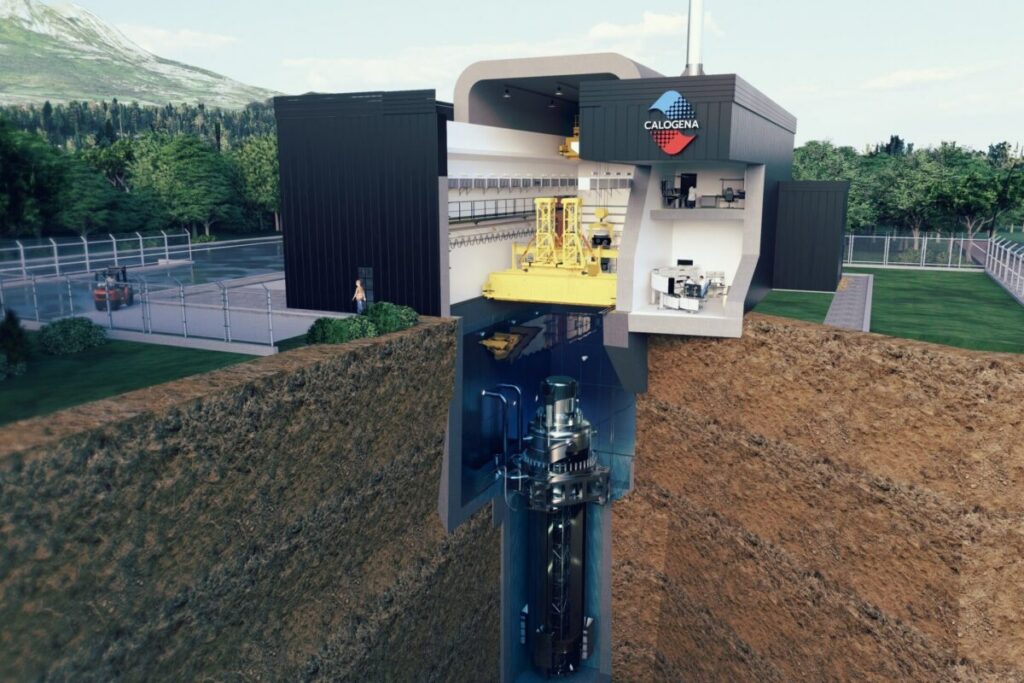
Following support from the French State earlier in 2026, the European Commission is now backing Calogena with a EUR 40 million grant. This is a first for the institution, which had never previously funded the construction of a commercial SMR. The support nevertheless remains conditional on securing the operating rights for Pierrelatte’s district heating network.
The tide is turning for European SMR developers. Following the European Investment Bank’s (EIB) first support for Finnish company Steady Energy in mid-September, French company Calogena is now set to receive a grant through the European Commission’s Innovation Fund. In a press release, the Gorgé Group subsidiary said it would receive EUR 40 million, which “will help fund the potential construction of its first commercial reactor to serve the town of Pierrelatte”.
If the project goes ahead, this would represent the European Commission’s first effective support for the development of a commercial SMR. “This is a historic decision, because for the first time it is the construction of a commercial reactor that is being supported,” a Calogena spokesperson told RGN. The grant is conditional on reaching a Final Investment Decision, although some funding may be released beforehand to finance orders for certain reactor components.
A favourable local context
Located near the Tricastin site, the town is partly supplied by a district heating network built in the 1980s to recover waste heat from the Eurodif uranium enrichment plant, also known as Georges Besse 1. After the facility ceased operations, a biomass cogeneration plant was built to take over. The current contract for operating the district heating network runs until 2031 or early 2032, Pierrelatte Mayor Alain Gallu told Entreprises.
The town therefore brings together several factors that could facilitate the deployment of Calogena’s first commercial unit: an established district heating network in an area where acceptance of nuclear power is supported by the presence of EDF and Orano. In September 2026, nine intermunicipal authorities, four departments, three regions and four prefectures, together with chambers of commerce and economic stakeholders from the Rhône-Marcoule area, submitted the region’s application to host a pair of EPR2 reactors.
One reactor at a time
Alongside this project, Calogena is moving forward with the construction of a demonstrator at the CEA site in Cadarache. Following the signing of a letter of intent in July 2025 with the public research organisation, Calogena launched a preliminary public consultation on this nuclear heating plant project, which will replace the existing gas-fired facility supplying the district heating network. “This project offers the opportunity to demonstrate, under real operating conditions, the viability of a module connected to a district heating network,” the company explains.
Calogena’s indicative schedule, covering the various regulatory stages and construction, provides for the Cadarache unit to enter commercial operation at the end of 2032, only a few months before the Pierrelatte unit. The tight schedule does not concern the company. Calogena is relying on the simplicity and inherent safety of its design, which is derived from pool-type research reactors.
Calogena can also rely on support at national level. At the Nuclear Energy Summit in Paris on 10 March 2026, the French State announced the first two winners of phase 2 of the “Innovative Nuclear Reactors” call for projects: Jimmy and Calogena. For the Gorgé Group subsidiary, the announcement translated into EUR 48 million in funding. Alongside this support, Calogena successfully completed a funding round of almost EUR 100 million, opening its capital to Groupe Snef, Banque des Territoires and the Deep Tech 2030 fund managed by Bpifrance on behalf of the French State.
“These very significant amounts give us visibility for more than two years. By 2028, we will have completed the detailed preliminary design of our reactor, submitted the creation authorisation application for our first-of-a-kind unit and secured our first commercial successes in France and Europe,” Julien Dereux, the company’s CEO, said in a press release. Finally, Calogena is also in the running for an EIB loan, with the bank expected to gradually announce the recipients of its EUR 200 million support programme. This would help the company look ahead to reactor production for the European market. “The company is already involved in several projects outside France and is notably competing for more than fifteen reactors in Finland,” Calogena said. ■