
Nuclear fusion: Europe must prepare for the post-ITER era, warns the National Academy of Technologies of France
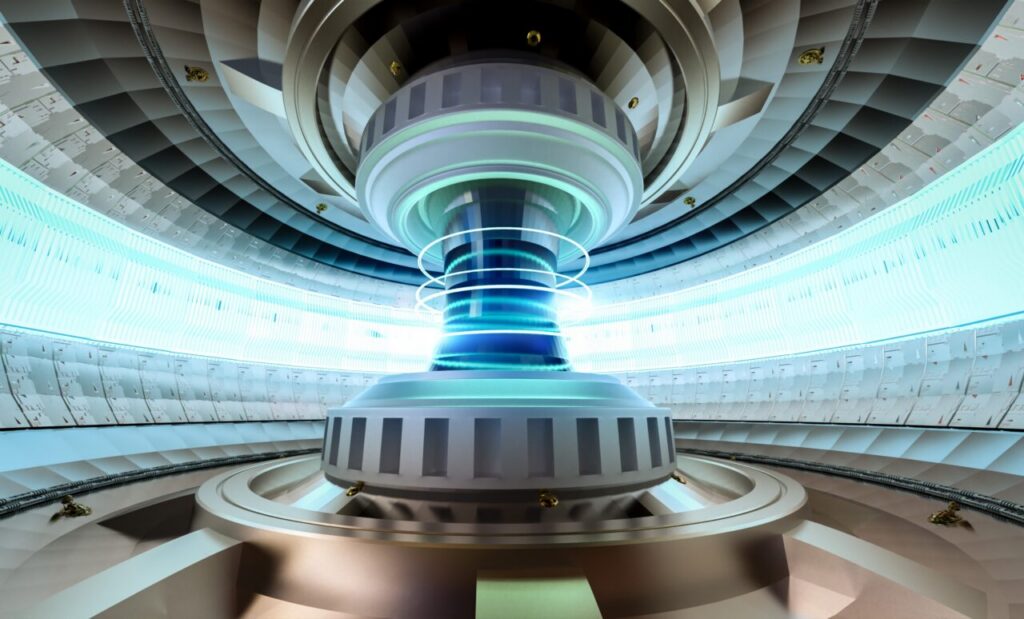
The global race for nuclear fusion is accelerating. Governments and private-sector players are multiplying their initiatives, but several technological barriers still separate scientific advances from an actual fusion power plant. In an opinion published on 9 September 2026, the National Academy of Technologies of France calls on France and Europe to start preparing now for the post-ITER era. At the heart of its recommendations is the development of a Volumetric Neutron Source.
Could nuclear fusion one day contribute to low-carbon electricity generation? Its technical and economic feasibility on an industrial scale has yet to be demonstrated. Nevertheless, the fusion landscape is evolving rapidly. Programmes are multiplying, private investment is increasing and several countries are now pursuing industrial ambitions. According to the new report by the National Academy of Technologies of France, these developments will continue whether or not France participates. The challenge is therefore to determine how France and Europe can remain part of this technological race. This drive towards industrialisation does not call into question ITER’s central role as an essential step towards future fusion power plants.
ITER, the major scientific milestone for fusion
Under construction at Cadarache, ITER brings together China, the European Union, India, Japan, Korea, Russia and the United States, among others, to demonstrate the scientific and technological feasibility of magnetic confinement fusion on a large scale. “ITER remains the global scientific and technical reference for nuclear fusion through magnetic confinement,” the National Academy of Technologies of France notes. In particular, it is intended to master the conditions required to sustain fusion reactions within the plasma and to further define the operating regimes of future machines.
Other facilities are already contributing to preparations for ITER. The CEA’s WEST tokamak, used notably as a test bed for the future machine, maintained a plasma for more than 22 minutes in 2025, setting a world record. But sustaining a plasma over long periods is not the same as being able to generate electricity from fusion: according to the Academy, ITER is a necessary but not sufficient condition for the emergence of fusion power plants.
Technological barriers beyond plasma control
Moving from a scientific experiment to a future power plant operating for several decades will require five major technological challenges to be overcome: the resistance of materials to intense neutron fluxes; the durability of components exposed to extreme heat fluxes; management of the tritium cycle, including breeding, extraction and safety; remote maintenance in a high-radiation environment; and, finally, the recovery of fusion energy and its efficient conversion into electricity. These technological barriers, which are common to most deuterium-tritium fusion approaches, whether based on magnetic or inertial confinement, cannot be fully addressed by ITER.
A high-energy neutron source to prepare for industrialisation
To take this next step, the Academy proposes starting work now on the development of a Volumetric Neutron Source(VNS). This infrastructure, dedicated to the controlled and intense production of high-energy neutrons*, would make it possible to expose materials and components to conditions representative of a future power plant in order to qualify the technology building blocks that are still lacking. Its role would be comparable to that of irradiation reactors and test loops in the field of fission.
The aim would therefore not be to build another ITER, but to complement it with a facility specifically designed to prepare for industrialisation. This is a strategic issue at a time when China has already embarked on the development of a facility of this type.
Preparations for the 2028-2032 Euratom framework programme, which coordinates nuclear fusion research and the co-funding of associated infrastructure at European level, offer Europe’s fusion ecosystem a window of opportunity: a VNS could form part of this programme through cooperation involving European public- and private-sector players, the United Kingdom and potentially other partners.
From scientific cooperation to industrial competition
The global fusion landscape is changing rapidly. Private investment has reached tens of billions over the past five years, technological concepts are diversifying and announcements of demonstrators, and even commercial power plants, are multiplying, often with timelines that the Academy considers “very ambitious”.
Asia — China, Japan and Korea — and the United States are major players in this acceleration. China combines research, new infrastructure and industrial capabilities, while numerous private companies in the United States have entered the race. The US Department of Energy roadmap published in June 2026 reports more than USD 10 billion in private investment. Japan, the United Kingdom and Germany are also strengthening their programmes.
This shift is changing the very nature of fusion research. Whereas ITER is based on cooperation between States and the sharing of results, the prospect of commercial applications is now increasing competition over technological capabilities and intellectual property. Fusion is gradually entering a new paradigm that is as industrial as it is scientific.
France has a role to play
France occupies a distinctive position in this landscape. As a host country, and through the CEA, its research laboratories and its nuclear industry, it has a range of capabilities that can be mobilised for the next stages of fusion development.
As Alain Bécoulet, Deputy Director-General and Scientific Director of ITER Organization, member of the National Academy of Technologies of France and co-author of the opinion, points out, “France has the scientific, industrial and regional assets to play a leading role within the European dynamic”. The Academy therefore considers that the potential siting of a VNS at Cadarache should be examined, particularly in view of possible synergies with ITER.
Having contributed extensively to the scientific endeavour of ITER, will Europe be able to turn this achievement into a technological and industrial advantage? For the National Academy of Technologies of France, the answer needs to be prepared today. ■
By Hélène Perrin, RGN journalist
Image: @Phonlamai Photo/Shutterstock
* Typically 14 MeV, characteristic of the deuterium-tritium reaction
Further reading:
Opinion of the National Academy of Technologies of France