
June heatwave: how nuclear power enabled France to get through the European heat peak
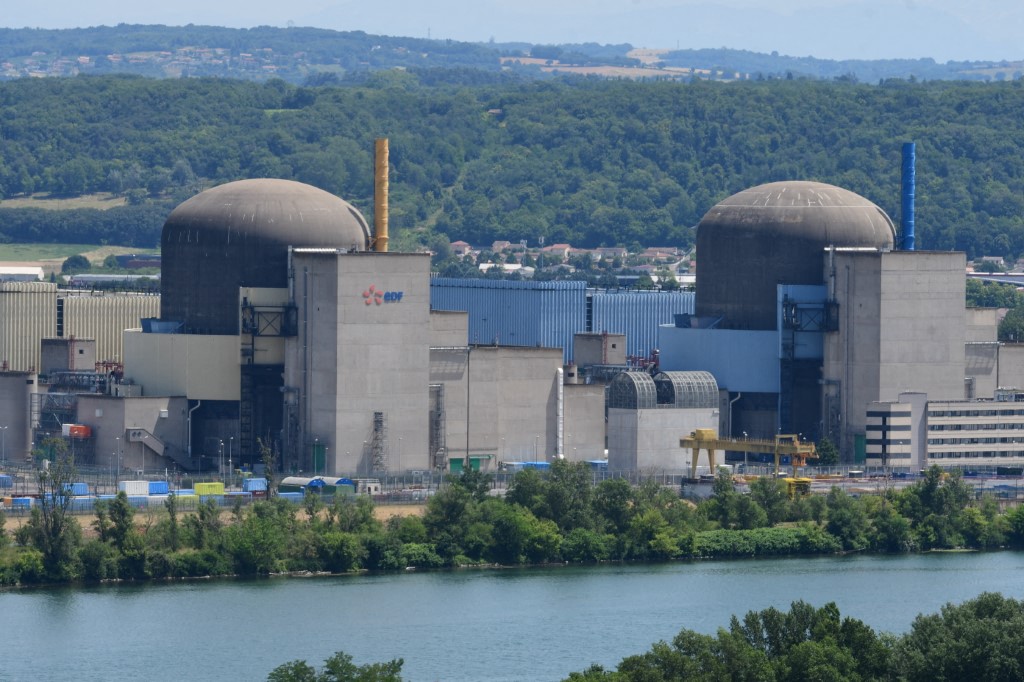
The exceptional heatwave at the end of June was a test for the French power system. Strong demand linked to air conditioning, weak wind generation and constraints on certain nuclear reactors: despite this unfavourable combination, France remained a net electricity exporter thanks to its nuclear fleet, according to a study by Aurora Energy Research.
We were familiar with the expression “Dunkelflaute” (“dark doldrums”) to describe periods of simultaneous shortages of wind and sunshine, mainly in winter. Our German neighbours now speak of “Hitzeflaute” (“hot lull”) to describe episodes in which high heat is accompanied by little wind. The power system is then subject to a double constraint: high demand, notably due to air conditioning, and low wind electricity generation.
On 7 July, Aurora Energy Research published a study entitled “The June 2026 heatwave put the French power system under severe strain, without however compromising security of supply”. This analysis shows that the nuclear fleet, despite limited production restrictions, remained a foundation of the power system. It enabled France to remain an exporter during the period and to support its neighbours, in particular Belgium and Germany, which were exposed to very high market prices in the late afternoon and forced to rely heavily on fossil fuels.
Strong rise in demand and unevenly affected generation assets
The heatwave at the end of June 2026 was described as a historic episode by Météo-France. It took place from 17 to 30 June 2026, with a peak in intensity between 22 and 26 June. 24 and 25 June were the hottest days ever recorded on average across France. For the first time, the national average temperature over 24 hours reached 30°C. 72 departments were placed on red heatwave alert, a record since the creation of this alert level in 2004. This heatwave was more intense than that of August 2003, while being shorter: 14 days, compared with 16 days.
According to RTE[1], during periods of extreme heat, for every additional degree, consumption generally increases by around 0.7 GW to 1 GW, depending on the time of day, three times less than the impact of one degree less in winter. Peak consumption reached 58 GW on 24 June. At the hottest point of the heatwave, additional demand was 12 GW compared with the pre-heatwave period, according to Aurora. The demand profile observed in the late afternoon on 24 June also shows a second peak. According to consultant Nicolas Goldberg, this could correspond to the moment when installations that had until then been supplied by their photovoltaic generation began drawing electricity from the grid again.
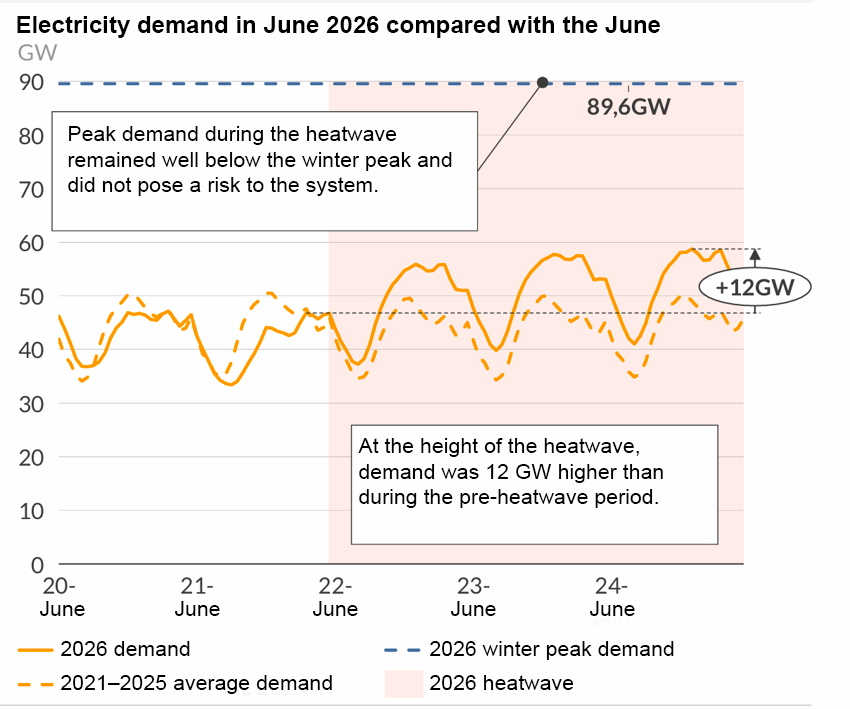
Title: Electricity demand in June 2026 compared with the June 2021-2025 average – Source: Aurora Energy Research
Despite this increase, mainly attributed to air conditioning, demand remained well below winter peak levels: as a reminder, consumption had reached 90 GW in January.
According to Aurora, solar power, supported by strong sunshine, generated in France around 30% above normal, while wind power, penalised by anticyclonic conditions, generated nearly 60% below normal. At the 6 p.m. peak on 24 June, wind power output was limited to 2 GW, compared with around 10 GW on average over the period from 1 to 21 June, a gap of 8 GW.
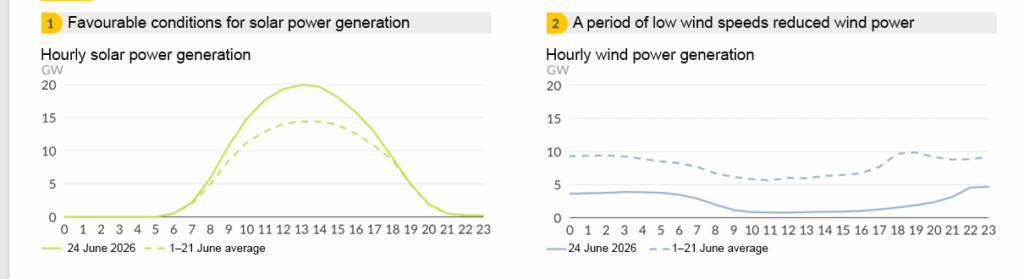
Title: Solar and wind generation in France during the June 2026 heatwave – Source: Aurora Energy Research
For the nuclear fleet, the impact remained limited: around 5.5 GW of capacity was temporarily unavailable in order to comply with regulatory constraints relating to river temperatures. Three reactors were affected: Nogent, Bugey and Golfech. France therefore remained an exporter throughout the heatwave period.
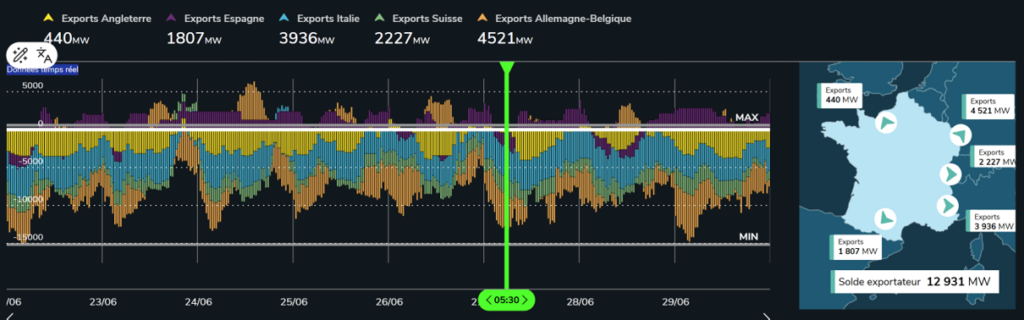
Title: France’s export balance with its neighbouring countries during the June 2026 heatwave. – Source: RTE
Use of thermal power plants in the late afternoon, in a situation of very high prices in Belgium and Germany
Aurora’s analysis shows that in the late afternoon, as solar generation declined, hydropower and then fossil-fired thermal generation assets, notably gas-fired power plants, took over to meet strong demand in France and in neighbouring countries. During the evening peak, peaking units, which are more expensive than conventional thermal power plants, were even activated. Between 6 p.m. and 9 p.m., thermal generation rose from 1 GW, including 0.8 GW of gas, in the pre-heatwave period to 5 GW, including 4 GW of gas, on average between 21 and 24 June.
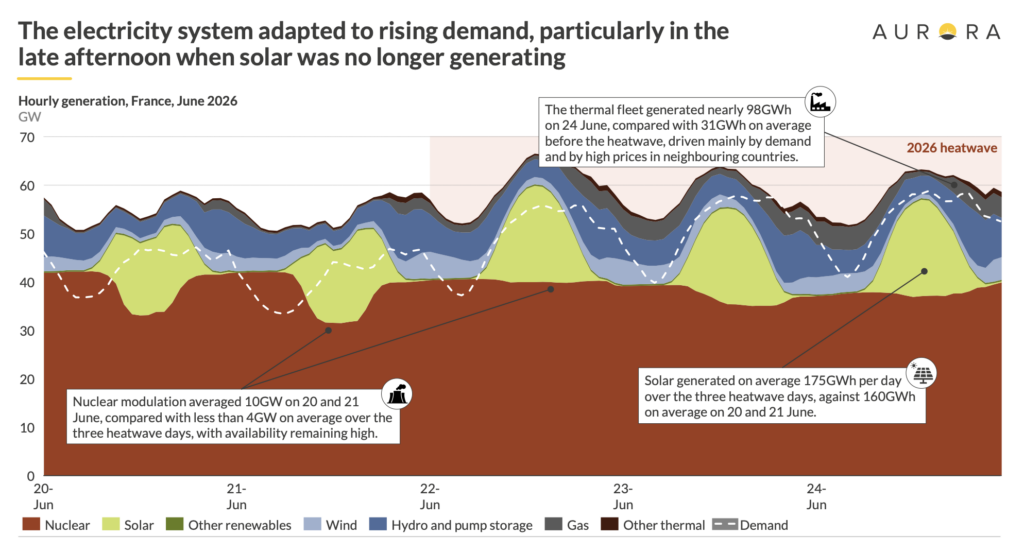
Title: Generation by electricity source in France between 20 June and 24 June 2026 – Source: Aurora Research
This Hitzeflaute resulted in a sharp surge in electricity prices in the late afternoon, particularly in Belgium and Germany, with significant recourse to imports from France. In Belgium, deprived of its two nuclear reactors undergoing works for their Long-Term Operation, average prices between 6 p.m. and 9 p.m. reached nearly €370/MWh from 22 to 24 June. On the evening of 24 June, they even peaked at €1,038/MWh. In Germany, despite heavy use of fossil-fired plants, average prices reached €424/MWh over the same time slot, while electricity imports increased by around 30%.
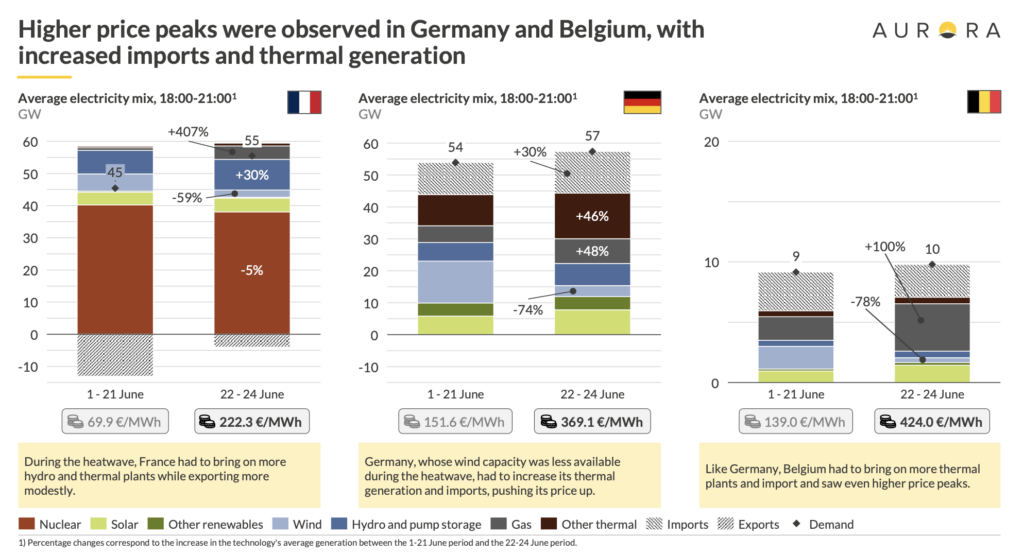
Title: Electricity mixes in France, Germany and Belgium during the heatwave and average prices between 6 p.m. and 9 p.m. – Source: Aurora Research
Lessons to be drawn for the nuclear fleet
In a post on LinkedIn, Etienne Dutheil, Director of EDF’s nuclear division, stressed that, during the heatwave, equipment performed well and nuclear safety was guaranteed at all times. At the height of the heatwave, between Wednesday 24 June and Friday 26 June, EDF had 41 reactors in production, connected to the power grid, and maintained work on the 13 scheduled maintenance outages currently under way, including three ten-year inspections. Work organisation arrangements were adapted to protect employees as much as possible from the effects of working in hot conditions.
As a reminder, the technical and nuclear safety issues associated with heatwave episodes had been addressed in a “Grands Chauds” plan launched following feedback from the 2003 and 2006 heatwaves. These actions focused in particular on verifying the temperature resistance of equipment important to safety, and adapting the cooling and ventilation systems of sensitive rooms. Organisational protocols were also put in place to protect employees in the event of extreme heat.
Etienne Dutheil nevertheless concluded that “all this can still be improved and we are now launching a feedback process.” Regarding the issue of French regulation on thermal discharges, several media outlets have mentioned systems such as those at the Civaux nuclear power plant, which make it possible to discharge water into the river at a temperature lower than that of the water abstracted. EDF says it is considering this solution as part of its climate change adaptation plan. ■
By Valérie Faudon, General Delegate of Sfen
Image: The Saint-Alban nuclear power plant, in Isère, on 21 June 2026. – @ROMAIN DOUCELIN / NURPHOTO / NURPHOTO VIA AFP
[1] RTE Heatwave: security of electricity supply does not call for any particular vigilance 22/06/2026