
Framatome opens its first additive manufacturing centre
Designed in less than a year, Framatome’s first additive manufacturing centre is now operational in Romans-sur-Isère. Equipped with two complementary metal 3D printing technologies, it promises to reduce manufacturing lead times for certain parts, improve the group’s industrial responsiveness and reduce the carbon footprint of their production.
“This is the first time that a European nuclear equipment manufacturer has equipped itself with such a tool,” said Grégoire Ponchon, CEO of Framatome, during the centre’s inauguration on 2 July. The site is intended to manufacture metal parts using 3D printing for the civil nuclear sector, but also for defence and aerospace. “We can produce high-precision parts ranging from a few grams up to 20 or 25 tonnes,” he said.
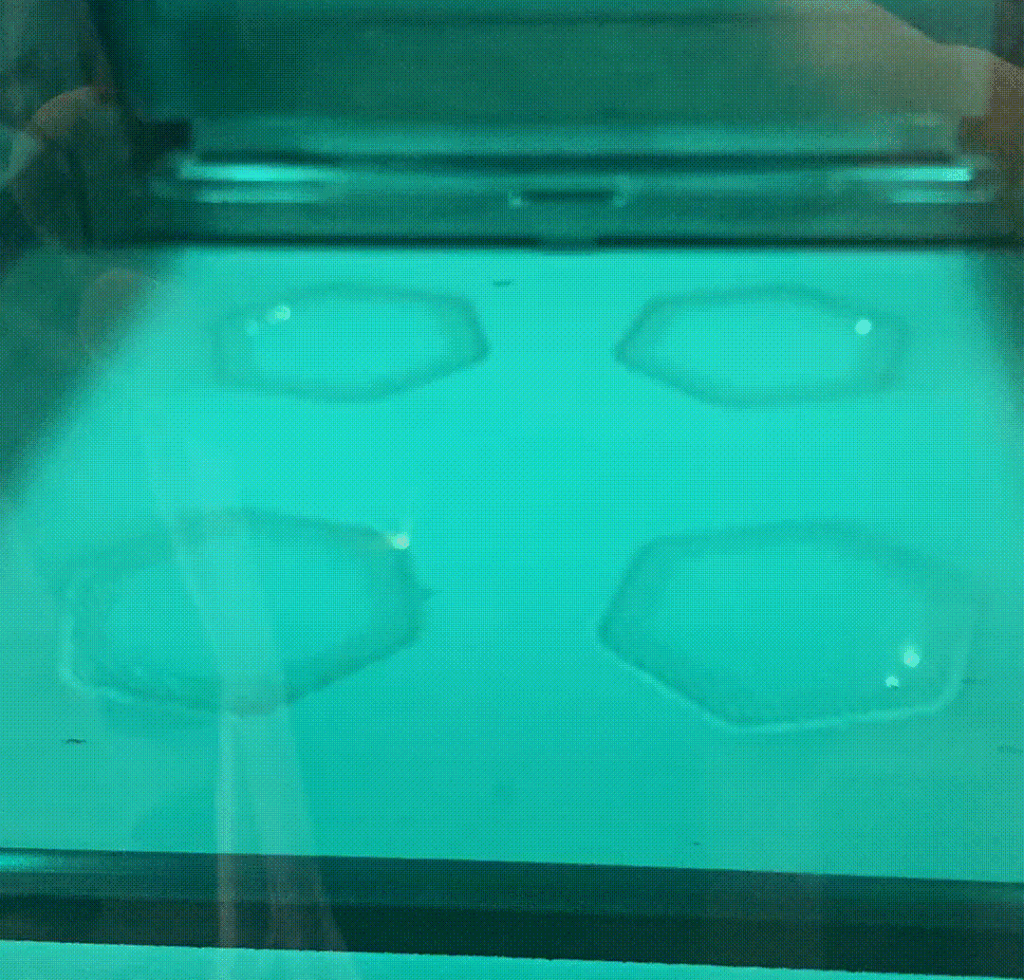
The 6,000 m² building, which employs around twenty people, houses two additive manufacturing processes designed to meet different needs. The first is based on Laser Powder Bed Fusion (LPBF). In controlled-atmosphere rooms, four lasers successively melt thin layers of metal powder in order to produce complex parts with very high precision. “With these successive solidifications, we can produce extremely complex small parts with great precision,” explained Mohamed Zouari, head of the new site.
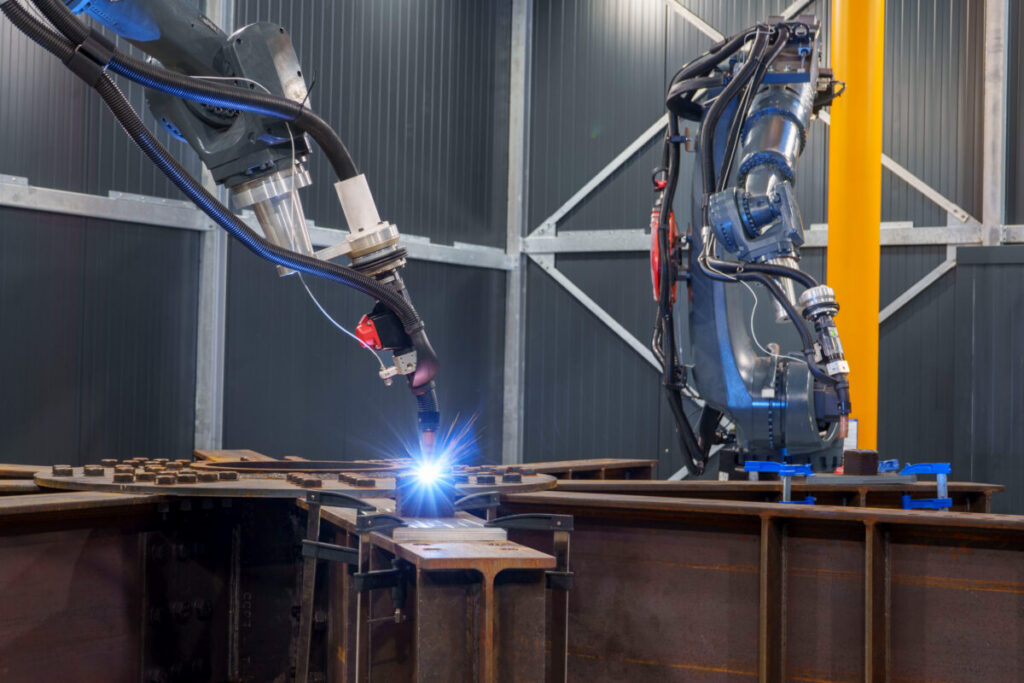
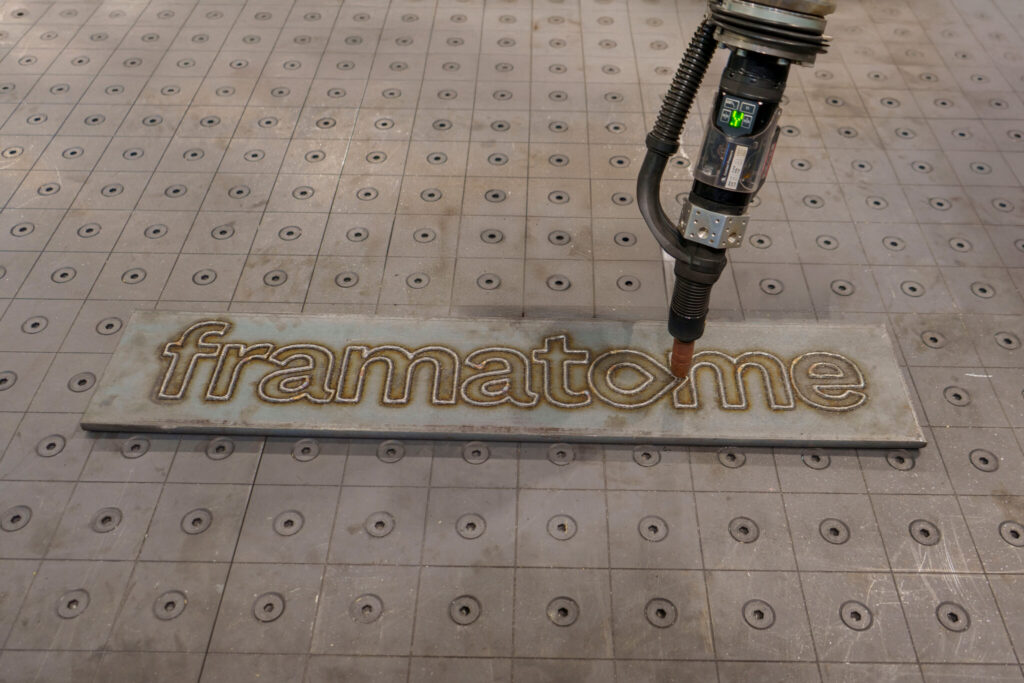
Where LPBF technology resembles a laboratory “where you could eat off the floor”, with its clean rooms and rigorous contamination control, Waam technology looks more like a welding workshop. Wire arc additive manufacturing (Waam) is based on more traditional welding methods. “The four-metre mechanical arm melts a welding wire using an electric arc and deposits the material directly onto the part,” the site director continued.
It is thanks to this technology that the largest parts will be manufactured. Depending on their size, one or two robotic arms deposit the material simultaneously. “Waam is not intended to replace all foundry operations, but rather a few specific parts on which we can achieve industrial gains in terms of time, cost, CO2 emissions, inventory management, sovereignty, and so on,” Mohamed Zouari listed.
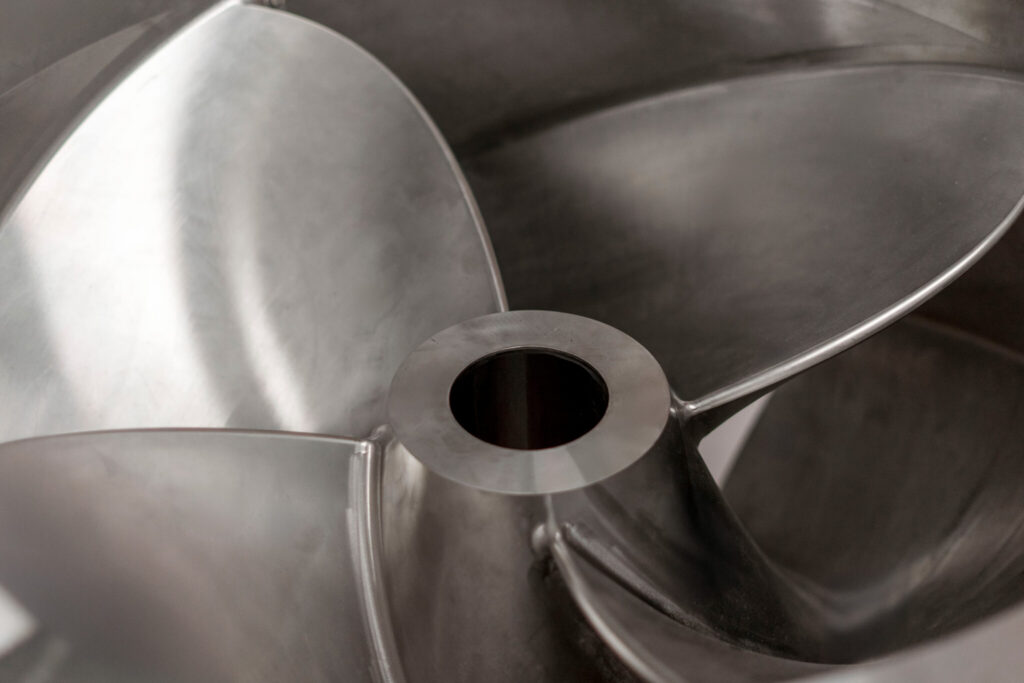
Waam technology has notably made it possible to manufacture a pump impeller intended for the Reactor Coolant System (RCS) of future EPR2 reactors (see below). The cost remains comparable to that of conventional manufacturing, but the lead time is spectacular: three months of manufacturing and seven months of post-processing, compared with nearly three years using a traditional casting process. CO₂ emissions are also reduced by around 80%.
The new site, located in the same industrial zone as Framatome’s fuel fabrication plant, was completed in record time. While Grégoire Ponchon emphasised that “this tool is the culmination of 15 years of research and development, with the 3D printing process resembling very high-quality welding”, the project itself is fairly recent. The idea was proposed to Framatome’s management in 2023 by Mohamed Zouari, who is now head of the additive manufacturing centre. The first stone was laid less than a year ago, with activities officially starting during May 2026. And the order book is already beginning to fill up: a first contract worth €10 million has been signed, the CEO of Framatome indicated. ■