
[You had to have seen it] Electricity exports: 51 TWh in the first half of the year, a new record for France
With 51 TWh exported in the first half of 2026, France has recorded an unprecedented record. For Thomas Veyrenc, this exceptional performance can be explained by the sustained recovery in nuclear generation, the ramp-up of renewable energy and the competitiveness of French electricity prices.
“51 TWh – this is the record level of the French electricity export balance in the first half of 2026,” Thomas Veyrenc, Executive Director for Economy, Strategy and Finance at RTE, welcomed in a LinkedIn post. This is the highest level ever reached in a first half-year period. By way of comparison, in the record year of 2025, the export balance stood at 37 TWh over the same period.
The contrast is even more striking when this figure is compared with previous years. France exported 55.7 TWh over a full year in 2019, and 50.3 TWh in 2023, the grid expert noted. This figure therefore illustrates a spectacular increase: what previously corresponded to a full year of exports has now been achieved in just six months. After the historical records of 2024 (89 TWh) and 2025 (92.3 TWh), France appears to be on course to set a new benchmark in 2026.
The high temperatures did not affect this phenomenon
“The heatwave last week did not alter this general trend,” Thomas Veyrenc explained. Despite an increase in national electricity consumption of around 10 GW, linked to the high temperatures in late June, France continued to play a central role in Europe’s electricity supply. The country exported 1.35 TWh of electricity during this period.
According to RTE, the country exported massively during this period to all neighbouring countries: “Germany-Belgium (14 TWh), Italy (14 TWh), the United Kingdom (12 TWh). It is a very slight importer from Spain (-1 TWh), which also produces at low prices,” Thomas Veyrenc noted.
Nuclear, renewables, prices: the keys to the export boom
Thomas Veyrenc identifies four factors explaining this unprecedented level of exports. First, “the recovery in nuclear generation”. In 2025, nuclear generation reached 373 TWh, an increase of 3.1% compared with 2024. This can be explained by the good availability of operating reactors and well-managed unit outages.
Second, the “growth in renewable generation”. Installed renewable energy capacity, particularly solar and wind, increased sharply, rising from 49 GW in 2024 to 56.2 GW in 2025. In 2026, although the year has not yet ended, it already stands at 58.5 GW.
Third, “consumption still below its pre-crisis level”. In 2025, electricity consumption stood at 451 TWh, remaining stable compared with the previous year. Its level remains around 6% lower than before the health and energy crises.
Fourth, “low marginal costs, and therefore competitiveness on the European market”. At the end of May 2025, for electricity delivery in 2026, French companies were able to contract their electricity at a price €26/MWh lower than in Germany, and €40/MWh lower than in Spain. According to Bernard Fontana, since November 2023, the wholesale prices available to customers to secure their bills over a one- to five-year horizon have fallen by 30% and returned to their pre-crisis level.
RTE’s electricity report for the first half of 2026 will be published during the month of July. ■
By Floriane Jacq, Sfen
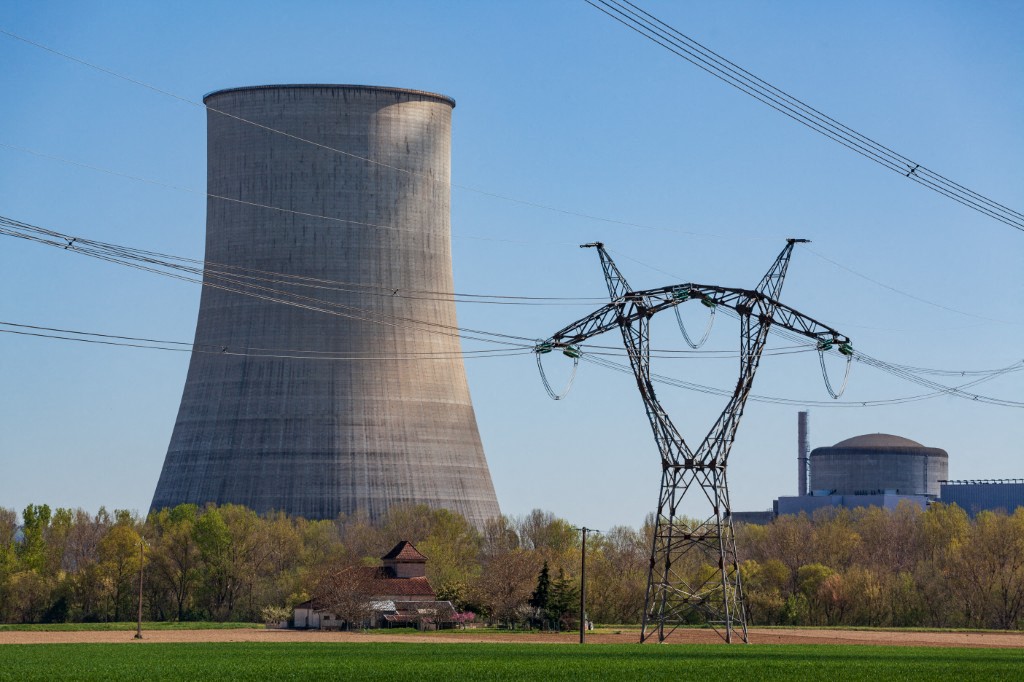
Image: The Golfech nuclear power plant, located in the Tarn-et-Garonne department, in the Occitanie region, whose reactors were shut down due to corrosion issues © JEAN-MARC BARRERE / HANS LUCAS / HANS LUCAS VIA AFP