
June heatwave: why EDF reduced nuclear power output by 5.5 GW
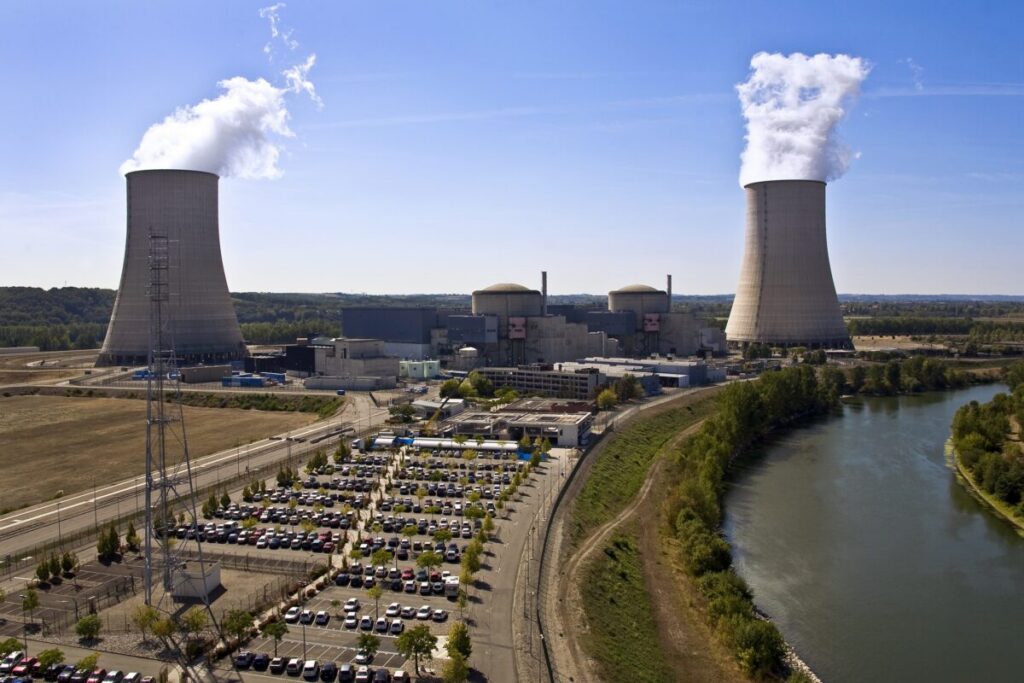
At the height of the heatwave, several reactors were shut down or reduced their output in order to comply with the thermal discharge limits set by regulations. These environmental measures did not prevent France from maintaining significant electricity export capacity.
The heatwave at the end of June 2026 led EDF to temporarily reduce the output of several nuclear reactors. In total, during the period of extreme heat, “around 5.5 GW was temporarily unavailable, equivalent to 8.7% of the installed capacity of the French nuclear fleet,” EDF told AFP.
These reductions are not linked to any lack of reactor resilience to heat. Several nuclear power plants around the world are in fact located in desert areas, such as Palo Verde (United States) or Barakah (United Arab Emirates)[1]. These limitations are imposed in order to comply with regulatory thresholds for thermal discharges designed to protect waterways. At the height of the episode, three reactors were shut down, at Bugey, Nogent-sur-Seine and Golfech, while several others reduced their output, notably at Chooz, Nogent, Saint-Alban and Blayais. At the time of writing, one reactor is unavailable at Bugey for weather-related reasons, while another has reduced its output at Saint-Alban [2].
Limitations linked to thermal discharges
ASNR sets two levels of limits for thermal discharges from nuclear power plants located on rivers in order to protect aquatic environments. The first provides for reducing the output of units if the upstream water temperature is too high. If security of electricity supply requires it, a second threshold exceptionally allows minimum generation to be maintained, subject to reinforced environmental monitoring[3].
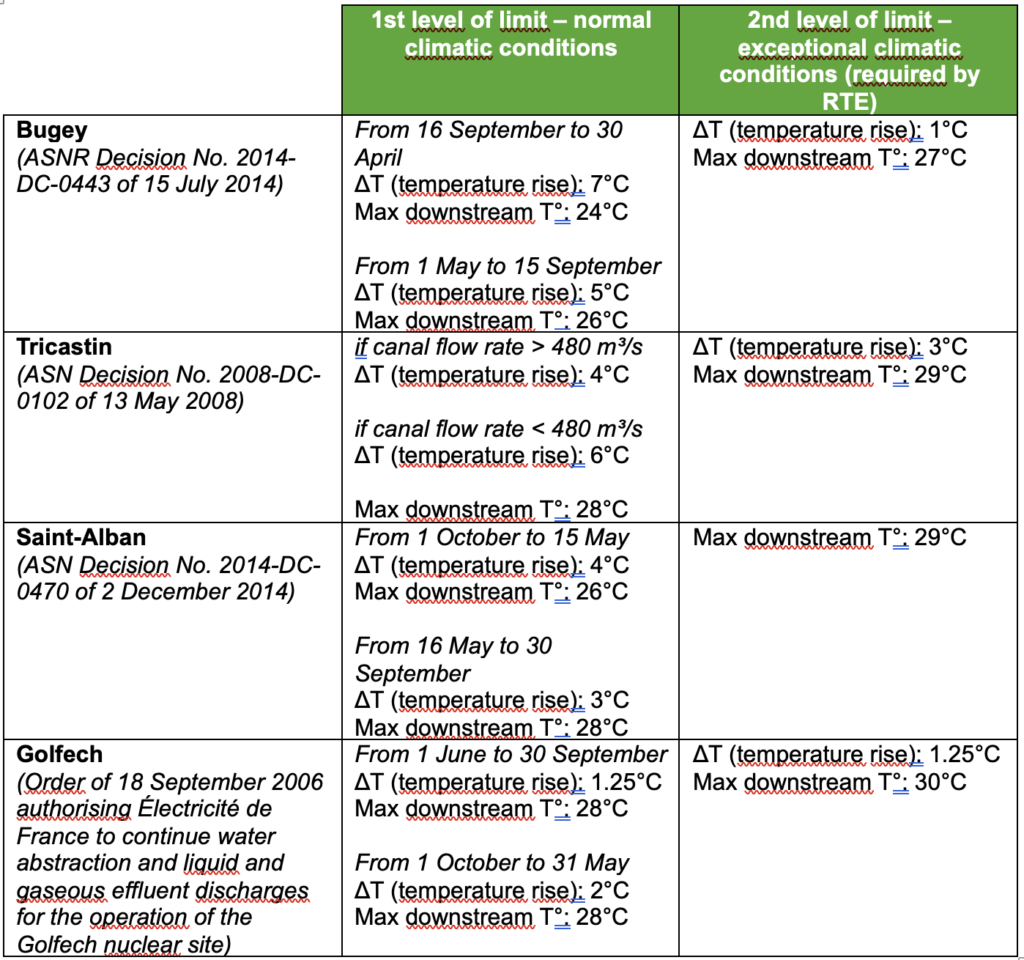
Table: the limit levels for thermal discharges from nuclear power plants located on rivers, ASNR
Despite this reduction, France is exporting massively thanks to its fleet
“Despite these occasional constraints, EDF stresses that the available plants continued to export a high volume of electricity to neighbouring countries,” AFP notes. From 22 to 28 June, France confirmed its role as Europe’s leading electricity exporter by delivering 1.3456 TWh to its neighbouring countries, equivalent to 13.31% of its electricity generation over the period [4]. This is nearly eleven times more than Germany, which exported only 0.117 TWh. Faced with low wind generation due to a period of limited wind across much of Europe, Germany had to import very heavily during this period. ■
By Floriane JACQ, Sfen
Image: Golfech nuclear power plant ©Marc, Didier/Wayne Philips/EDF
[1] How do nuclear power plants cope with heatwaves? – Sfen
[2] Nuclear weather
[3] thermal-discharge-from-nuclear-power-plants-during-summer-periods.pdf
[4] Electricity Maps