
EDF joins AION consortium to support a European AI Gigafactory in France
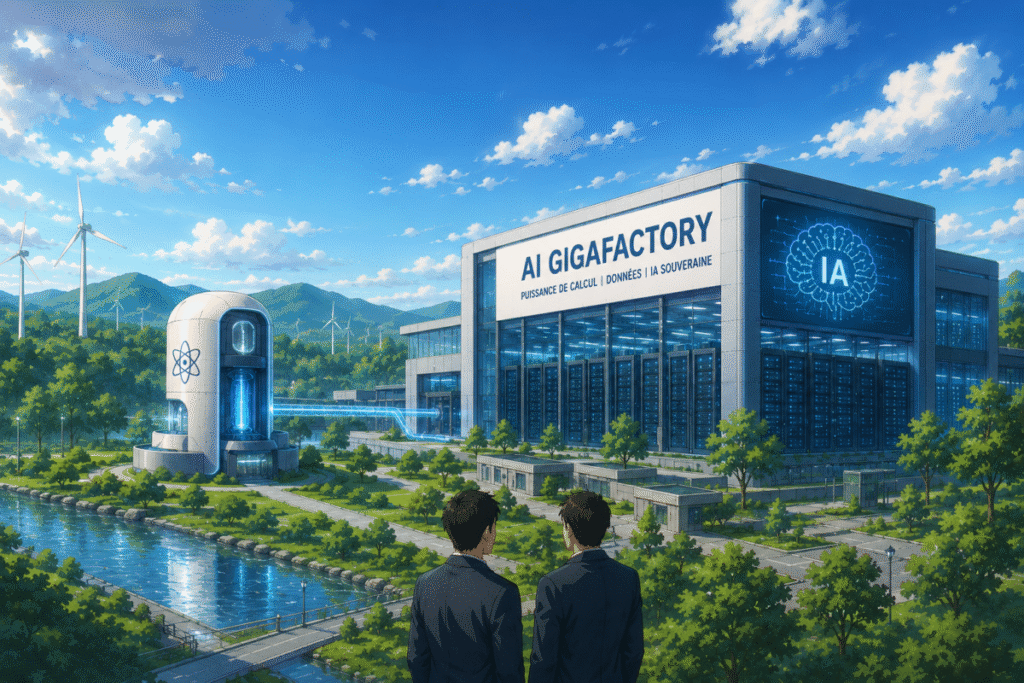
Through the AION consortium, EDF aims to leverage one of France’s key advantages in the global race for artificial intelligence: abundant, competitive and largely decarbonized electricity generated by nuclear and hydropower.
On May 21, 2026, eight major French players from the energy, digital and technology sectors announced the creation of the AION consortium to support a French bid under the European AI Gigafactories programme. The consortium includes EDF, Orange, iliad Group, Scaleway, Bull, Capgemini, Artefact and Ardian. Its ambition is clear: to establish a European AI computing infrastructure in France capable of competing with major American and Chinese platforms.
Initially launched by Scaleway in 2025, the AION project responds to a call for expressions of interest issued by the European Commission and the EuroHPC Joint Undertaking. Created in 2018, EuroHPC brings together the European Union, Member States and private partners to develop European supercomputing and high-performance computing capabilities.
The future AI Gigafactories are intended to represent a new generation of digital infrastructure, combining massive computing power, large-scale data resources and advanced automation for the training and deployment of artificial intelligence models.
A matter of industrial sovereignty
For the consortium members, control of computing capacity has become a major strategic issue for European economies. Their stated objective is to enable European companies and public-sector organizations to develop and operate AI models without relying exclusively on infrastructure designed or operated outside Europe.
The consortium highlights an approach covering the entire value chain: supercomputers and critical infrastructure provided by Bull, sovereign cloud services from Scaleway and Orange, data centres from iliad Group, AI deployment expertise from Artefact and Capgemini, and financing and industrial expertise from Ardian. EDF contributes the energy component of the project.
Electricity as a French advantage
The French bid is built around a central argument: the availability of abundant, competitive and largely decarbonized electricity generated by nuclear and hydropower. This has become a critical issue as artificial intelligence infrastructure requires enormous amounts of electricity.
In the consortium’s press release, Béatrice Bigois, EDF Executive Director in charge of Customers, Services and Regions, stated that “France has major strengths to support the development of AI infrastructure, including competitive, sovereign and low-carbon electricity.”
Beyond its eight founding members, AION is also supported by a broader ecosystem of academic and industrial partners, including INRIA, GENCI, Hugging Face, Schneider Electric, Sopra Steria, SiPearl and Quandela.
The consortium says it intends to structure the project around four pillars: performance, trust, openness and responsibility, with particular attention paid to the environmental footprint of artificial intelligence. According to several specialised media outlets, the investment could reach around €10 billion. The next step will be the formal launch of the European tender process to select the future host sites. ■