
Iter: ASNR Excludes Vacuum Vessel from Nuclear Pressure Equipment Regulations
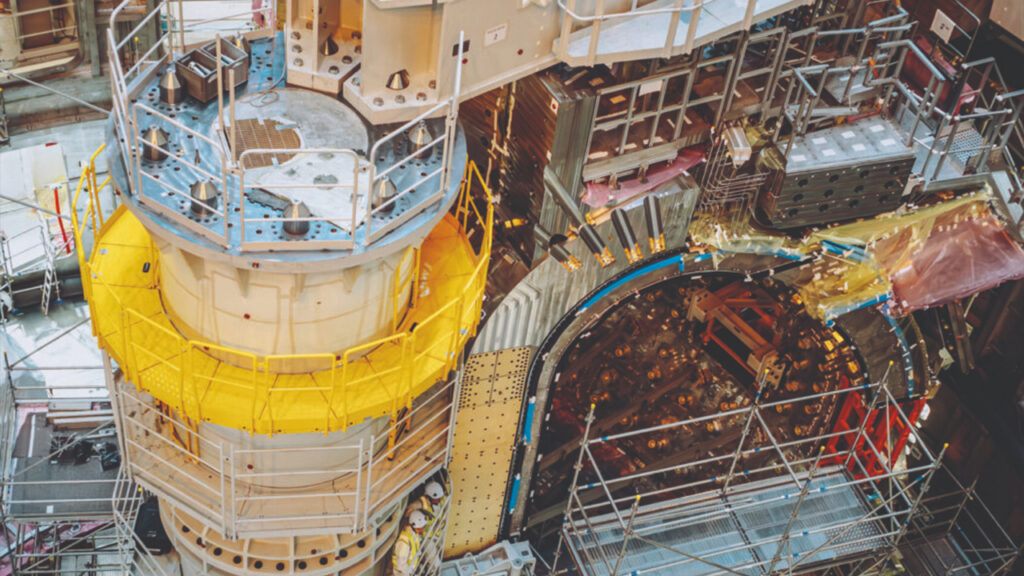
France’s Nuclear Safety and Radiation Protection Authority (ASNR) has agreed to exclude the vacuum vessel of the ITER project from the scope of nuclear pressure equipment (ESPN) regulations. The decision marks an important step forward for both the reactor and the fusion sector, demonstrating the regulator’s flexibility toward fusion technologies.
It may seem like a technical detail, but for the French fusion sector it carries significant implications. ASNR has accepted to exclude the vacuum vessel of the ITER experimental tokamak from pressure equipment regulations (ESPN). The exemption is justified by the specific nature of this equipment compared with fission reactors, which are the primary target of these safety requirements. While the decision illustrates the ability of the French nuclear regulator to adapt to innovation, particularly fusion technologies, it does not constitute legal precedent and cannot automatically be generalized to other facilities, including future fusion installations.
Pressure equipment regulations have a long history, predating their application to the nuclear sector. Their purpose is to ensure the safety of all pressure equipment, especially systems containing hazardous substances. “These regulations are based on a set of technical and methodological requirements covering design, manufacturing, and in-service monitoring,” Pierre Bois, Deputy Director General of ASNR, explained to RGN. Nuclear equipment involving specific risks linked to radioactivity is subject to additional requirements associated with the safety function of confinement.
Regulations designed for fission reactors
One of the symbolic obligations under pressure equipment regulations is the hydraulic pressure test, during which equipment is subjected to pressures exceeding normal operating conditions. “This stage is absolutely critical for EDF’s pressurized water reactors, particularly during the ten-year inspections of primary circuits,” Pierre Bois noted. “However, it represents only a small portion of the overall requirements that ensure long-term monitoring of the equipment.”
While ESPN regulations ensure reliability in radioactive material confinement and accident prevention for conventional nuclear facilities, they are not fully suited to a machine as innovative as a fusion reactor. “In ITER’s case, the main stresses applied to the vacuum vessel are not generated by the pressurized coolant, but by the magnetic fields used to confine the plasma inside the tokamak,” explained the ASNR Deputy Director General. “The forces do not apply in the same locations and do not have the same profile. Ultimately, the design basis of the equipment is driven not by pressure, which is secondary, but by resistance to magnetic forces.”
Adapting regulations to nuclear fusion
ITER’s vacuum vessel is a metallic structure designed to provide the first level of confinement, stabilize the fusion plasma, and support internal systems such as blankets and the divertor. “Its mechanical design is mainly driven by electromagnetic loads, whereas the pressure loads associated with the coolant circulating within the double-wall structure are not a determining factor for mechanical resistance. Pressure between the two walls is on the order of several dozen bars, while the associated stresses are four to five times lower than those generated by electromagnetic fields,” added Gilles Perrier, Head of Safety, Security and Quality for the international project.
As a result, the ESPN framework originally developed for fission reactors is not fully compatible with the design of a tokamak. “However, confinement requirements remain unchanged from a safety perspective, since the vacuum vessel remains classified as an Important Component for Protection (EIP). The same applies to machine performance requirements linked to the extreme vacuum conditions inside the vessel,” emphasized Gilles Perrier. In a tokamak, any breach in the confinement boundary directly leads to the shutdown of the nuclear reaction.
These factors led ASNR to exclude ITER’s vacuum vessel from ESPN regulations. “We are not moving from one regulatory framework into a regulatory vacuum,” Pierre Bois stressed. “It appeared more operationally effective to regulate ITER’s vacuum vessel through provisions applicable to basic nuclear installations.”
A first step
For ITER Organization, the decision concludes three years of work and constructive discussions with ASNR, with significant implications for manufacturing and quality control processes. “ESPN regulations are very rigid, with constraints on inspections and repairs, as well as quality supervision mainly relying on third-party organizations,” Gilles Perrier continued. “Based on the feedback gained during workshop fabrication of the vacuum vessel sectors, ITER Organization considers that these pressure-equipment requirements would have significantly affected the welding work on the nine sectors, scheduled to begin by the end of 2027.”
ITER is now developing a new framework “adapted to the project’s needs while maintaining a very high level of manufacturing and quality.” A quality management programme audited by a third party is currently under development. “It will be presented to ASNR in 2026, together with revised criteria regarding the maximum admissible size of welding defects,” noted Gilles Perrier.
The ASNR decision highlights the regulator’s ability to show flexibility toward innovative projects. “We are demonstrating that French regulations provide a certain degree of flexibility and the ability to implement what is known as a graded approach, meaning focusing attention on the real safety issues and avoiding unnecessary constraints where the stakes are limited,” Pierre Bois explained. However, this adaptability does not mean the creation of a dedicated regulatory framework for nuclear fusion. ITER remains first and foremost a research installation and does not necessarily represent what future commercial reactors will look like technically. “The same conditions may lead to the same outcomes, but I urge caution regarding any attempt by industry players to interpret this decision as legal precedent. That is not the case.”
Closely watched by the private sector
The private fusion sector has taken notice. Unlike some other countries, France has not committed to creating a dedicated regulatory framework for nuclear fusion. Nevertheless, this regulatory adjustment is viewed positively. “This is a constructive step toward what we call a ‘fit-for-purpose’ regulatory approach for fusion,” Masood Akmali, Head of Safety and Regulation at Renaissance Fusion, told RGN. “Each decision therefore becomes a very useful precedent, showing that fusion components can be assessed according to their actual safety function and the genuinely dominant design loads.” ■