
Fessenheim formally begins full decommissioning
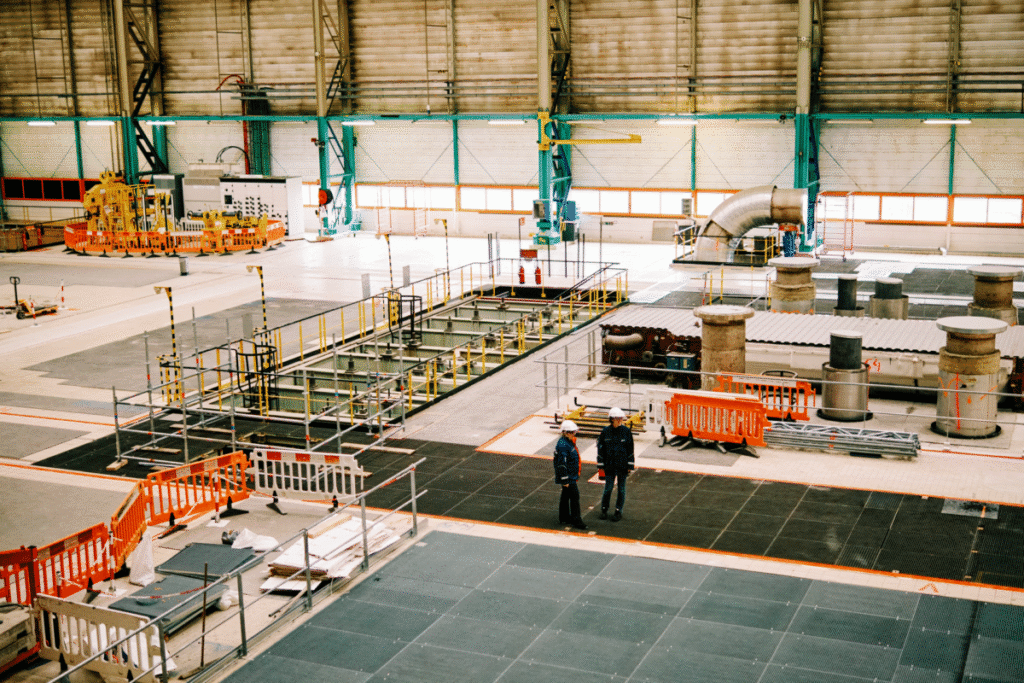
The decree published on 3 May 2026 officially marks the entry of the Fessenheim nuclear power plant into its full decommissioning phase. For EDF, this project constitutes the first full-scale feedback experience on the complete dismantling of a 900 MW pressurised water reactor (PWR).
Six years after the permanent shutdown of its two reactors, the Fessenheim nuclear power plant is officially entering its full decommissioning phase. The decree published in the Official Journal on 3 May 2026 authorises EDF to begin major operations across the entire site. This is a major industrial milestone for the French nuclear sector, opening its first complete dismantling project for a large pressurised water reactor. The decision also closes, at least from a technical and regulatory standpoint, the recurring debate over a possible restart.
Official transition to decommissioning status
The decree changes the legal status of the basic nuclear installation. Operated since 1977, Fessenheim is changing status: it is no longer a shut-down power plant, but an installation officially under decommissioning. The text authorises EDF to carry out all dismantling operations on the two 900 MWe reactors. It covers the entire industrial scope: reactor buildings, spent fuel pools, auxiliary systems, effluent treatment installations and conventional buildings.
The schedule is ambitious: EDF is targeting completion of operations by 30 June 2048. This sequence will make Fessenheim the first complete decommissioning feedback experience for a large PWR in France.
In reality, the decree does not mark the beginning of the project but rather a change of scale. Since the shutdown of reactor 1 on 22 February 2020, followed by reactor 2 four months later, EDF has been carrying out so-called pre-decommissioning operations: complete removal of fuel, draining of systems, adaptation of equipment, initial dismantling operations and radiological preparation of the facilities.
The ASNR validates, but sets conditions
The government authorisation is based on a favourable opinion issued at the end of January by the Nuclear Safety and Radiation Protection Authority (ASNR). The authority considers the scenario proposed by EDF to be globally satisfactory, while highlighting several technical points requiring attention.
“Certain specific points will be subject to technical requirements from the ASNR, notably concerning reactor vessel segmentation operations, decontamination of structures and soils, and planned effluent discharges,” the ASNR wrote in a statement. It added that “In accordance with the decommissioning decree, the final state of the site must at minimum be compatible with industrial use, and the operator has committed to targeting a decontamination level allowing a final state compatible with all uses.”
For EDF, a new industrial phase
On LinkedIn, Cédric Lewandowski welcomed the opening of “a new chapter” for the Alsatian site. The message is twofold: to position decommissioning as a strategic industrial activity, while also preparing the site’s nuclear reconversion.
EDF is notably promoting its Technocentre project, a facility intended to recycle very low-level radioactive metals from decommissioning activities. The project represents an estimated investment of €450 million and could create around 200 jobs. EDF also specifies that “99.9% of the radioactivity has already been removed from the site, allowing this dismantling phase to begin under safe conditions.”
Why Fessenheim will not restart
The issue regularly returns in public debate: in a context of nuclear revival, why not restart Fessenheim? The site has no longer held an operating licence since the repeal decree of February 2020. Legally, the process would have to start again from scratch. But beyond this, the installation has already undergone profound changes.
The fuel has been removed, the primary systems decontaminated, major components dismantled and some transferred to other power plants as spare parts. In addition, Fessenheim never received certain equipment that became essential after the 2011 Fukushima accident.
Added to this is a major human factor: almost all operating teams have been redeployed. Yet training a complete PWR operating team requires several years. Finally, the fourth periodic safety review, required for any continued operation, was never completed.
In practice, restarting Fessenheim would not consist in simply “switching the plant back on.” It would require rebuilding an industrial tool, reconstituting teams, redoing the entire safety demonstration and making massive new investments. ■
By Ludovic Dupin, Sfen
Image: Turbine hall of the Fessenheim nuclear power plant on 25 November 2025 – © Lucile Péllerin / REA