
Italy: nuclear return opens a new opportunity for the French nuclear industry
Almost forty years after turning away from nuclear power, Italy has adopted a law paving the way for its return. This major policy shift still needs to be translated into concrete rules, but EDF and Nuward are already positioning themselves. Rome is thus joining several European countries that have, in recent years, revived or developed new nuclear programmes.
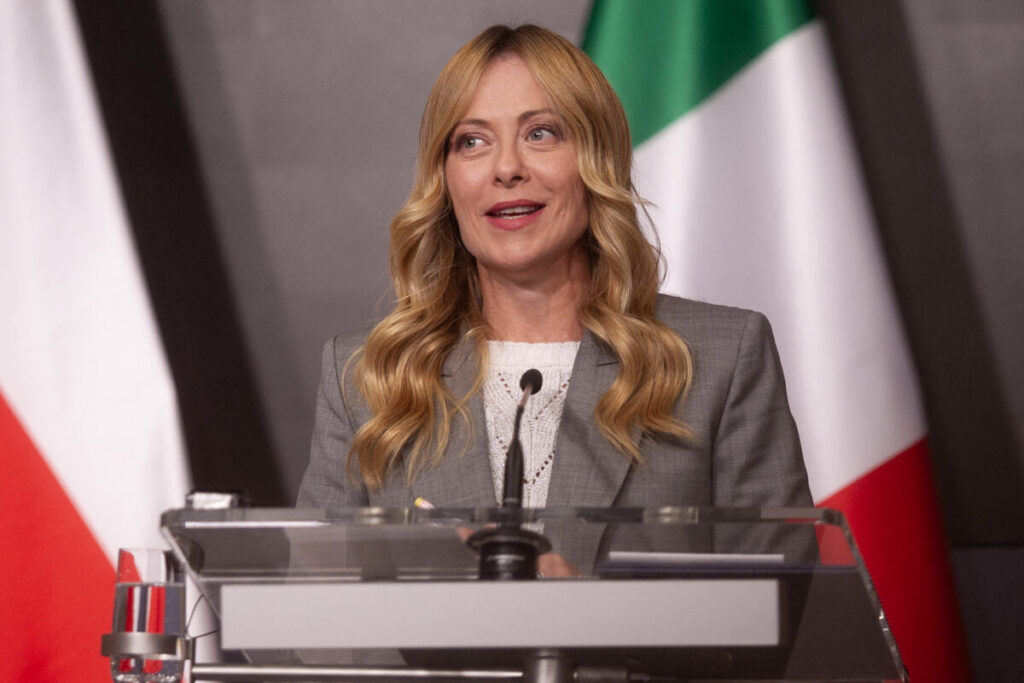
“After almost forty years, Italy once again has a regulatory framework for producing nuclear energy. A courageous and common-sense choice,” Giorgia Meloni said when the long-awaited law was passed. The Italian Prime Minister continued: “Today, we import electricity produced by nuclear power plants in neighbouring countries, but we cannot produce it ourselves. This law is intended to change that.”
The Italian Parliament definitively adopted the text on 23 September, with 81 votes in favour, 51 against and seven abstentions in the Senate. Now Law No. 169 of 29 September 2026, the “Delegation to the Government on sustainable nuclear energy” was published in the Italian Official Gazette on 30 September and will enter into force on 15 October.
However, Italy has not just decided to build a nuclear power plant, nor has it selected a technology or chosen a site. This is an enabling law giving the Government the authority to develop the framework that will once again allow nuclear power to be developed. The text notably provides for a national programme, the establishment of an independent nuclear safety authority, a framework for spent fuel and radioactive waste management, as well as for research and development.
A change of direction forty years later
This represents a major reversal for a country that had been one of the pioneers of civil nuclear power in Europe from the 1960s before abandoning it. Following the Chernobyl accident, the 1987 referendum paved the way for Italy’s nuclear phase-out. The final two reactors, Caorso and Trino Vercellese, closed in 1990. A first attempt to revive nuclear power was subsequently halted following the Fukushima accident in 2011.
Fifteen years later, the political and energy context has changed profoundly. Since 2023, the Italian Government has been working on the possibility of reintroducing nuclear power into the electricity mix. For Gilberto Pichetto Fratin, Minister for the Environment and Energy Security and the main sponsor of the legislation, this is precisely not about returning to yesterday’s energy system: “Nuclear power is not a return to the past: it is a winning technology that, together with renewables, can deliver extraordinary results for our energy security on the path towards climate neutrality by 2050.”
EDF returns to Italy, this time with Nuward
For the French nuclear industry, Italy’s return represents an opportunity. In February 2009, when the Berlusconi Government was already preparing a nuclear revival, EDF and Enel entered into an industrial partnership. Together, they studied the feasibility of building at least four EPRs in Italy. At the time, the programme envisaged the first reactor entering service around 2020. The referendum held in Italy following Fukushima in 2011 brought that ambition to an end.
Seventeen years later, EDF is once again present, this time with its future SMR developed by Nuward. In June 2026, EDF and Nuward signed a declaration of intent with eight Italian companies, including Edison, Ansaldo, Saipem and Webuild, to prepare for the development and deployment of the French reactor.
More importantly, the strategy is not simply to export to Italy a reactor designed and manufactured in France. Nuward sees the future Italian market as an opportunity to build a European industrial value chain. “Beyond the deployment of a first reactor, this momentum creates concrete opportunities for Italian industry to contribute to the development of the technology and become part of the value chain of the future European SMR programme,” the company stated on LinkedIn.
This is one of the particular strengths of the Italian case. The country has not generated nuclear electricity for more than thirty years, but it has never completely left the nuclear industry. Groups such as Ansaldo Nucleare, Saipem and Walter Tosto have retained capabilities and are involved in international projects.
The situation also recalls that of 2009. At the time, EDF and Enel had already involved Ansaldo in the EPR programme and begun identifying and qualifying Italian companies that could participate in the supply chain.
Italy could therefore become both an initial market and an industrial base for the French project. Nothing is guaranteed, however: Rome has not yet selected any technology, and the Italian market will inevitably attract other project developers.
Italy joins a broader European trend
The Italian case is particularly striking because the country had twice abandoned the prospect of nuclear power. But it forms part of a broader transformation of the European landscape.
Belgium has also profoundly changed a phase-out policy introduced twenty years earlier. The 2003 law provided for the gradual closure of nuclear power plants and effectively prohibited new capacity. After deciding to extend the operation of Doel 4 and Tihange 3, the Belgian House of Representatives adopted a law in May 2025 removing the principle of a nuclear phase-out, with 102 votes in favour, eight against and 31 abstentions.
Sweden has already moved to the next stage: financing. Since August 2025, developers of new reactors have been able to apply for government loans and contracts for difference. Poland, meanwhile, is developing its first nuclear power programme around three Westinghouse AP1000 reactors, representing approximately 3.75 GW.
Further discussions and projects are also emerging among new entrants and in countries reassessing their positions, including Denmark, Norway, Lithuania and Croatia. ■
By Ludovic Dupin, Sfen journalist
Image: Giorgia Meloni, President of the Council of Ministers of Italy – @MILAN KAMMERMAYER / AFP