
Cossen, guardian of French nuclear security
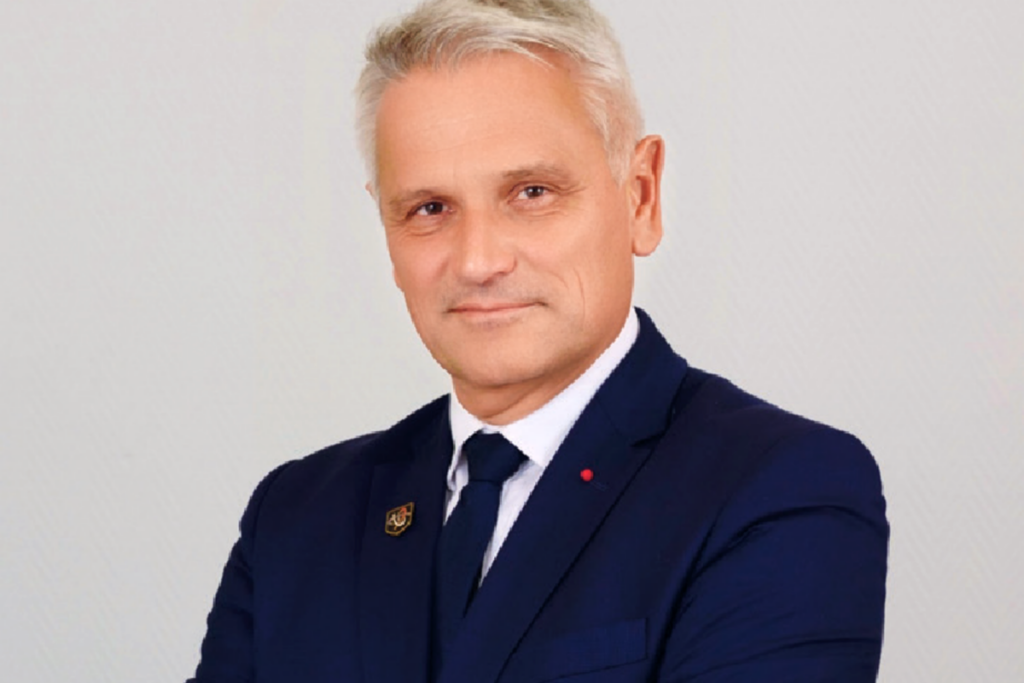
Created in 2016, the French Specialised Command for Nuclear Security (Cossen) has become a central player in French nuclear security. Ten years after its creation, the nuclear revival has further strengthened its role within the sector.
Note: This article was originally published in RGN 2026-2, Summer 2026.
To understand the overall protection framework for French nuclear activities, it is important to distinguish between nuclear safety and nuclear security. Nuclear safety refers to all technical provisions and organisational measures taken to prevent accidents or limit their consequences at basic nuclear installations and during the transport of radioactive substances.[1] Under the French Environmental Code, this definition forms part of the broader legal concept of nuclear security. More specifically, the French Defence Code defines nuclear security as the protection of nuclear facilities and materials against threats involving theft, loss or diversion that could enable the manufacture of a nuclear weapon, as well as the risk of terrorist attack.[2]
The organisation of this overall protection framework is based on two complementary pillars: ASNR for nuclear safety and radiation protection, and an integrated ministerial organisation, supplemented since 2016 by the French Specialised Command for Nuclear Security (Cossen), created to protect nuclear facilities and materials against malicious acts. Initially established in response to the need to strengthen the physical protection of sites and the screening of people accessing them, Cossen now takes into account developments affecting the nuclear sector, including its revival and the increasing number of crises and conflicts.
Ten years after its creation, Cossen has reached a significant level of maturity. Its relationships with both institutional and industrial stakeholders make it a forum for dialogue and information sharing, with the aim of continuing to raise the level of civil nuclear security.
From 9/11 to intrusions at nuclear power plants
The terrorist attacks of 11 September 2001 profoundly changed the perception and management of threats, particularly terrorist threats, moving from a case-by-case law-enforcement approach to a preventive and permanent approach to overall security.
France therefore reconsidered its approach to counter-terrorism, translating it into various plans developed by the General Secretariat for Defence and National Security (SGDSN).[3] This work was particularly extensive for the protection of sensitive sites, especially nuclear facilities, given the unacceptable consequences that an event in this field could have for people and the environment.
The State’s framework was developed through regulation along two dimensions. First, an interministerial security framework for activities of vital importance[4] was established to protect public or private operators identified as essential to the continuity of the Nation’s activities, or whose operations could pose a serious threat to the population in the event of an attack. Second, regulations were developed concerning the “protection and control of nuclear materials, their facilities and their transport” (PCMNIT),[5] which also take into account the need to prevent acts of sabotage. Implementation of these measures led to stronger physical protection of nuclear sites, shifting from an approach focused on protection against theft to one designed to protect against malicious terrorist acts.
However, several intrusions by environmental activists into nuclear power plants in the early 2010s raised questions about the apparent ease of gaining access to these sites. Interministerial inspections were subsequently carried out and identified a need for greater coordination among institutional stakeholders in this field and for the harmonisation of security policies.
Drawing on these recommendations, the 2016 Action Plan against Radicalisation and Terrorism (PART) called for the “creation of a service with national jurisdiction intended to complement the protection arrangements for civil nuclear sites”. This service, Cossen, was created by an order jointly signed by the Ministers responsible for the Interior and Energy on 20 July 2016 and was established as a service with national jurisdiction by a decree of 20 April 2017.[6] Positioned at the intersection of the responsibilities of the Ministry responsible for Energy and the Ministry of the Interior, Cossen provides the coordination required to address nuclear security issues comprehensively.
Understand, anticipate, protect
Cossen has three main missions, carried out for nuclear operators and national or local institutional stakeholders: identifying and monitoring all those accessing nuclear sites, collecting information on events occurring within entities associated with the nuclear sector, and improving the response of internal security forces to such events.
As the Ministry of the Interior’s centre of expertise for civil nuclear security, Cossen collects, centralises, analyses, synthesises and disseminates intelligence relating to threats. Processing this information enables it to identify potential weak signals and report them to the competent services, which can then initiate additional measures.
These missions give Cossen detailed knowledge of the nuclear ecosystem, which is used to prevent threats and promote a shared security culture based on the principle that security is “everyone’s responsibility”.
Cossen also develops the expertise of personnel from the National Gendarmerie and National Police involved in nuclear-related missions. In particular, it contributes to the preparation and conduct of regular exercises testing the security measures implemented by operators against different threats. It assesses the response of the internal security forces, which supplements the operator’s initial response.
It also advises national and local authorities on the development of national defence and security planning. The diversity of its missions and stakeholders has enabled Cossen to develop distinctive expertise at the intersection of three fields: security, intelligence and nuclear activities. This is complemented by a common understanding of the legal framework among all personnel, as law plays a central role in nuclear security. This shared culture is now one of Cossen’s main assets in supporting both operators and public authorities as threats evolve.
Nuclear revival and new threats
The nuclear sector is entering a new phase of development, driven by the President of the Republic’s “Belfort speech” of February 2022. This momentum is profoundly transforming the sector: major industrial companies are launching new projects, while many SMEs and start-ups are joining the nuclear ecosystem.
Cossen’s activity is therefore increasing accordingly, with new entrants to the sector to be taken into account, companies to be familiarised with nuclear security culture, and potentially new geographical areas to be incorporated into protection planning. The SMEs now joining the nuclear supply chain thus form what could be described as a “Nuclear Industrial and Technological Base” (BITN).
At the same time, the international environment is becoming more tense, marked by an increasing number of conflicts, hybrid attacks and unrestrained competition. Alongside physical threats, particularly terrorist threats, which remain high, other threats are emerging through the use of information systems, including information and reputational threats to which the nuclear sector is particularly sensitive.
Created to strengthen the protection of civil nuclear sites following the intrusions of the early 2010s, Cossen has become a central player in French nuclear security over the past ten years. It contributes to consolidating France’s governmental nuclear security framework under the authority of the Nuclear Security Department (DSN), alongside the Directorate for Nuclear Expertise in Defence and Security (DEND). Its role is expected to grow in order to maintain a high level of protection for facilities, nuclear materials and the sector as a whole. ■
By Major General Jean-Valéry Lettermann, Director of Cossen
Image: Major General Jean-Valéry Lettermann, Director of Cossen, during a visit to ITER – ©Cossen
[1] Article L591-1 of the French Environmental Code.
[2] Article R.133-1 of the French Defence Code: “Nuclear security” refers to the protection and control of nuclear materials and associated activities against malicious acts and losses. Any act that could facilitate or is intended to enable the theft or diversion of nuclear materials, particularly for the purpose of nuclear proliferation, or any act that could facilitate or is intended to cause damage, particularly an act of a terrorist nature, constitutes a malicious act […]
[3] The SGDSN assists the Prime Minister in carrying out responsibilities relating to defence and national security. Its remit covers all strategic defence and security matters, including military planning, deterrence policy, domestic security contributing to national security, economic and energy security, counter-terrorism and crisis-response planning.
[4] Decree No. 2006-212 of 23 February 2006 relating to the security of activities of vital importance.
[5] Articles L1333-1 to L1333-14 of the French Defence Code.
[6] Decree No. 2017-588 of 20 April 2017 establishing a service with national jurisdiction known as the “Commandement spécialisé pour la sécurité nucléaire”, jointly signed by the ministries responsible for the Interior, Energy and Defence.